
 English
 Italiano
Complete Guide to Pruning Fruit Plants 🍎
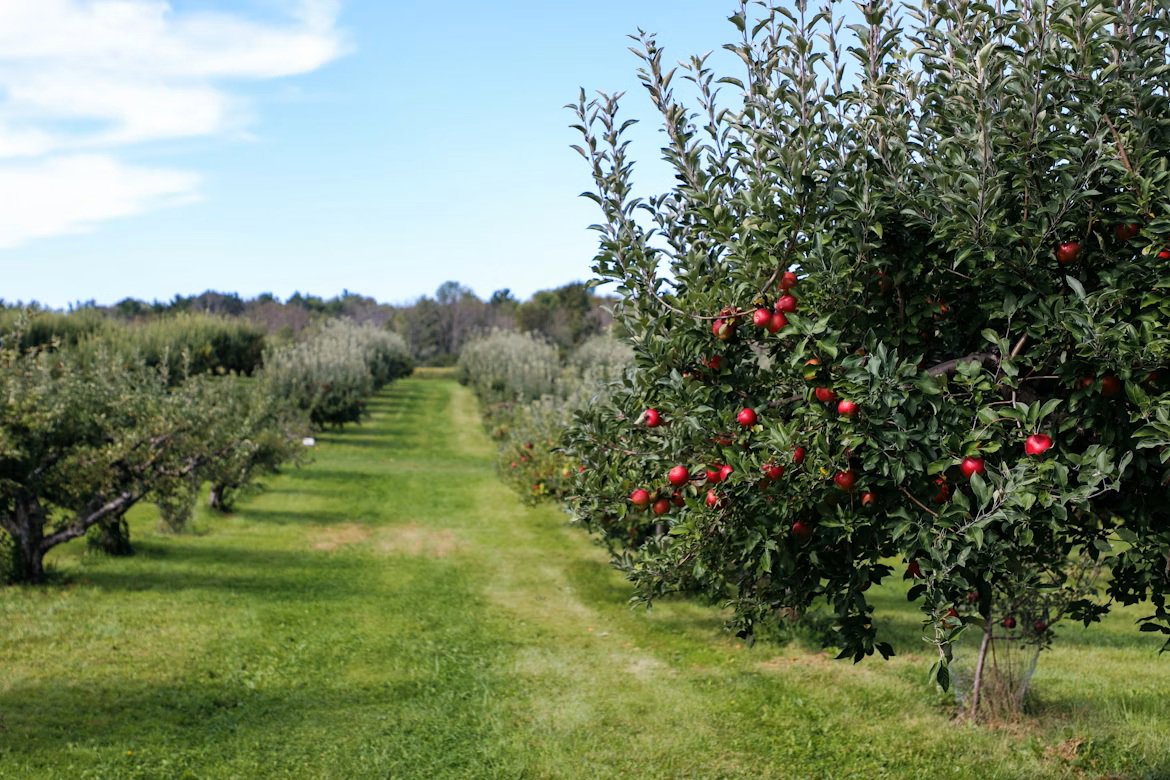
All the secrets and step-by-step techniques to properly prune your fruit plants, promoting healthy growth, abundant fruit and long-lived plants.
Pruning fruit plants is not just an aesthetic operation: it is a fundamental intervention to ensure healthy growth, abundant production, and quality fruit.
Whether you have an entire orchard or just one tree in your garden, trimming the right way can be the difference between a poor harvest and a record-breaking one. In this comprehensive guide, we'll explore the techniques, time, and tools needed to care for your plants easily and effectively.
Pruning does not simply mean "shortening the branches", but intervening strategically to guide the development of the plant, optimizing its energy resources.
Pruning done correctly increases both the quantity and quality of the fruit produced, extending the life of the tree itself.
The main benefits of this practice are:
- Light and Air: It promotes the penetration of the sun and the circulation of air even inside the foliage, reducing the humidity that favors fungi.
- Disease Prevention: Eliminate dry, diseased, or damaged branches before they become a vehicle of infection for pests and fungi.
- Plant balance: It distributes the sap evenly, preventing the tree from wasting energy on unproductive branches.
- Easy harvest: Keeps tree height and shape manageable for harvesting and care operations.
When to prune fruit plants: the ideal calendar
Choosing the right time is crucial: an out-of-season cut can compromise flowering or expose the plant to lethal frosts. There are two main moments to intervene.
Winter pruning (or "dry") pruning
It is the main intervention and is carried out during the vegetative rest of the plant, generally between January and March.
Summer (or "green") pruning
It is performed between June and August. It does not serve to distort the shape of the plant, but to refine it. It is very useful for species such as peach and apricot. In this phase, the suckers (vigorous branches that grow straight upwards, stealing nourishment) are eliminated, and the leaves are thinned out to allow the ripening fruits to sunbathe.
The 3 Main Pruning Techniques
Not all pruning serves the same purpose. Depending on the age of the tree and your needs, you will need to apply a different technique:
| Type of Pruning | When is it done? | Main purpose |
|---|---|---|
| Formative | First 3-4 years of life | Give a solid structure and a balanced shape to the plant (e.g. vase or espalier). |
| Production | Every year (adult plant) | Maintain the balance between new leaf growth and fruit production. |
| Rejuvenation | Old or neglected plants | Drastic cuts to eliminate exhausted branches and stimulate the birth of new, productive vegetation. |
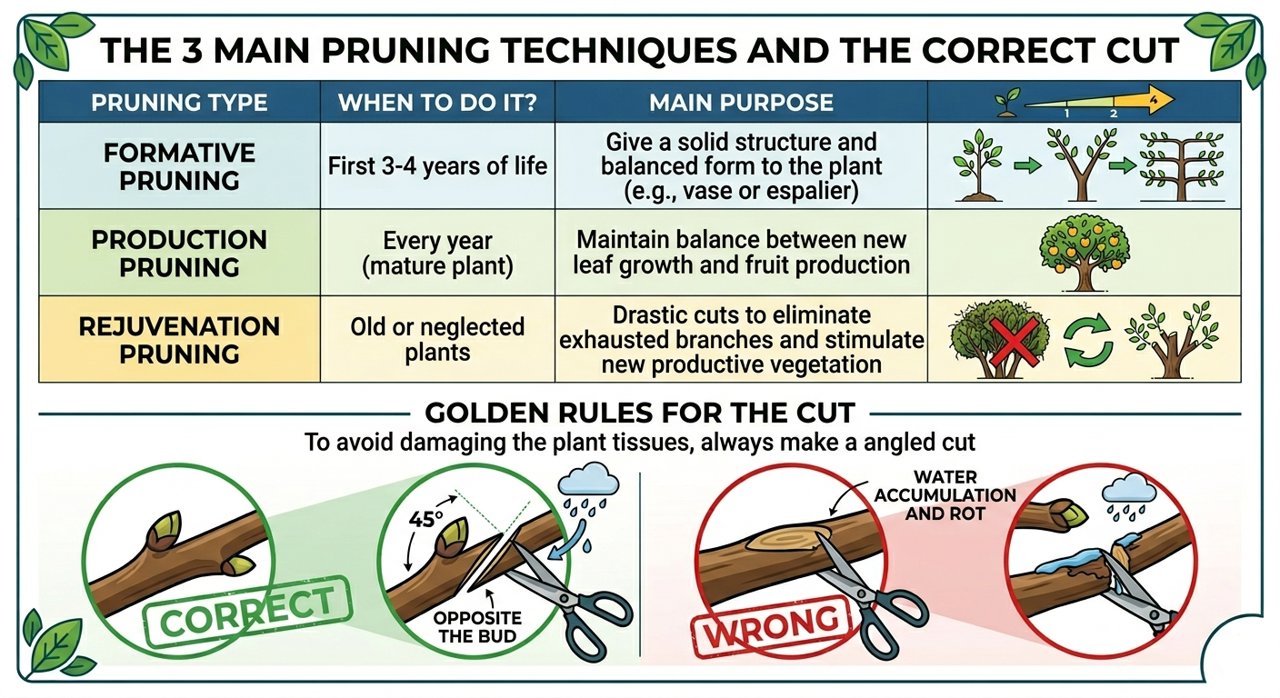
Golden rules for cutting
To avoid damaging the plant's tissues, always make an inclined cut of about 45°, opposite the bud. This will cause rainwater to slide off, preventing it from stagnating on the wound and creating rot.
The essential tools (and how to use them)
For the well-being of your orchard, the quality of the tools matters as much as the technique. Here's what should not be missing in your shed:
- Pruning shears (Shears): Ideal for younger and thinner branches (up to 2 cm in diameter). They ensure a clean cut.

- Loppers: Thanks to the long handles, they offer the leverage effect needed for medium-thick branches (up to 4-5 cm).


- Pruning saw: Indispensable for the largest and hardest branches. Choose one with a curved blade to reach the difficult places.
⚠️ Safety note for plants: Before switching from one plant to another, always disinfect the blades with alcohol or a special solution. It is the most effective way to avoid transmitting diseases or viruses from a diseased tree to a healthy one.
Post-pruning care: how to protect the cuts
Once the cuts are finished, the work is not finished. Pruning wounds are real open doors for pathogens.
- Use a healing putty: Apply it to larger cuts (over 2-3 cm) to seal the wood and protect it from the elements.
- The natural alternative: Many professionals and organic enthusiasts prefer to use propolis-based solutions, which have a natural antibacterial, antifungal, and regenerating action for the plant's health.
- Monitoring: In the following weeks, check the status of the cuts regularly to ensure there are no gummy emissions or signs of fungal attacks.
Pruning done wisely and consistently is the real secret to turning your green thumb into a generous orchard. Don't be afraid to cut: with the right tools, respect for natural times and a little practice, your plants will thank you by giving you extraordinary harvests year after year.

Comments (0)
No comments yet. Be the first to comment!