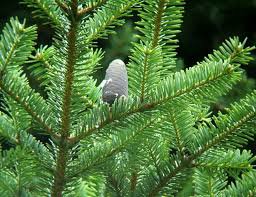
Abies homolepis Fine Webbing
eco Fine Webbing

Abies homolepis – Fine Webbing

Why does your Abies homolepis have fine webbing? Diagnose the cause and fix it with our step-by-step guide.

pets Pet Friendly

search Possible Causes

error

Two-Spotted Spider Mite (Tetranychus urticae)

These microscopic arachnids thrive in hot, dry conditions and feed on the sap of Abies needles, leaving behind characteristic fine silken webs. The damage typically manifests as stippling or bronzing of the needle tips.

Very Common
lightbulb
How to confirm: Hold a white piece of paper under a branch and tap it to see if tiny crawling dots fall onto the paper.
build How to fix it
shopping_cart Recommended Products
1 Apply an organic miticide or insecticide to eliminate the spider mite population and destroy eggs and larvae.
2 Increase humidity around the plant and avoid hot, dry air, as spider mites thrive in arid environments.
3 Prune and dispose of heavily infested or dead needles to prevent the mites from spreading to healthy parts of the tree.
warning

Pacific Yew Psyllid (Psychomorpha)

While less common on Abies homolepis than on Taxus, certain psyllid species can produce fine webbing while feeding on new growth. This often results in distorted needles and localized webbing around developing buds.

Common
lightbulb
How to confirm: Inspect the undersides of new, soft growth for small, scale-like insects or sticky honeydew residue.
build How to fix it
shopping_cart Recommended Products
1 Inspect the new growth and developing buds for any remaining insects or larvae, and manually remove any visible webbing or distorted needles to reduce the pest population.
2 Apply an organic insecticide spray to the affected areas to eliminate psyllid nymphs and adults, and prevent further feeding on new growth.
3 Monitor the plant regularly using a fine mist to check for new webbing, ensuring the pest does not spread to healthy foliage.
warning

Spotted Webworm

The larvae of certain moth species create silk webs to protect themselves while feeding on the foliage of coniferous trees. This can lead to visible webbing and patches of defoliation as the larvae consume needle tissue.

Common
lightbulb
How to confirm: Gently pull at the webbing to check for the presence of small, caterpillar-like larvae inside.
build How to fix it
shopping_cart Recommended Products
1 Apply an organic insecticide to eliminate the larvae and destroy the silk webbing protecting the pests.
2 Manually remove and dispose of visible webbing and any heavily defoliated needle clusters to reduce the pest population.
3 Monitor the tree regularly using a fine spray to check for new silk formations or larvae emergence.
local_hospital All symptoms eco All plants with fine webbing
favorite


