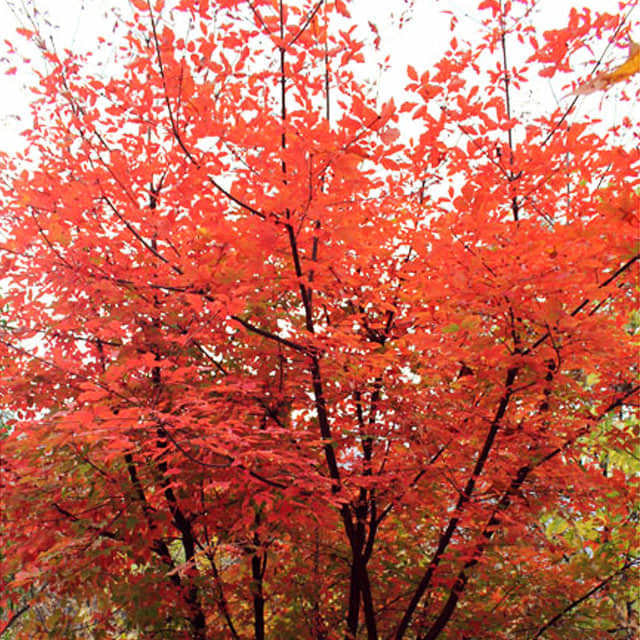
Why does your Acer griseum have sticky leaves? Diagnose the cause and fix it with our step-by-step guide.
Pet FriendlyAphids are small, soft-bodied insects that pierce the tender new growth of Acer griseum to suck sap. As they feed, they excrete 'honeydew,' a clear, sticky substance that coats the leaves and can lead to secondary black sooty mold.
Scale insects attach themselves to the stems and leaf petioles of the Paperbark Maple, feeding on sap. Their excretions result in a persistent sticky film on the foliage surfaces below their feeding sites.
While not the primary cause of stickiness, Sooty Mold is a fungus that grows on the honeydew left by insects. It creates a dark, crusty appearance on the leaves, which can further trap dust and debris, making the foliage feel grimy.
Treehoppers feed on the phloem of Acer species, much like aphids, and release large amounts of sugary honeydew. This often results in significant sticky buildup on the lower leaves of the canopy.

 English
 Italiano

