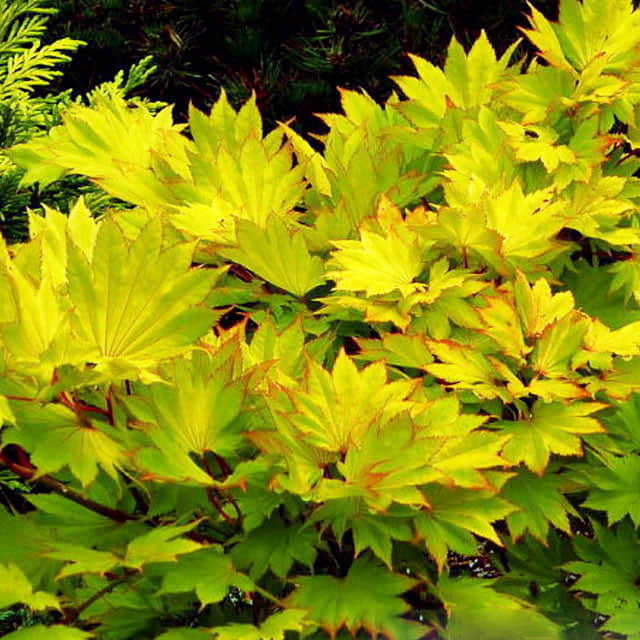
Acer shirasawanum Fine Webbing
eco Fine Webbing

Acer shirasawanum – Fine Webbing

Why does your Acer shirasawanum have fine webbing? Diagnose the cause and fix it with our step-by-step guide.

pets Pet Friendly

search Possible Causes

error

Spider Mites (Tetranychidae)

Tiny arachnids thrive in hot, dry conditions and pierce the leaf cells of Japanese Maples to suck sap. The fine webbing is a protective structure created by the mites as they colonize the undersides of the foliage.

Very Common
lightbulb
How to confirm: Hold a white piece of paper underneath a branch and tap it to see if tiny dark specks begin to crawl.
build How to fix it
shopping_cart Recommended Products
1 Apply an organic insecticide spray to the undersides of the leaves to eliminate existing mites, eggs, and larvae.
2 Increase local humidity around the maple by misting the foliage regularly, as spider mites thrive in hot, dry environments.
3 Monitor soil moisture levels to ensure the plant is not under drought stress, which can make it more susceptible to infestations.
error

Spider Mites infestation due to Drought Stress

While not a pathogen itself, extreme lack of humidity causes 'Acer shirasawanum' to produce physiological stress signals that attract mite populations. This often results in stippling (small yellow dots) on the leaves alongside the webbing.

Very Common
lightbulb
How to confirm: Check if the soil moisture is significantly below the required levels for this species and if the air is particularly dry.
build How to fix it
shopping_cart Recommended Products
1 Apply an organic miticide/insecticide to eliminate the spider mite population and destroy any remaining eggs or larvae.
2 Increase ambient humidity around the maple to reduce drought stress and make the environment less hospitable to mites.
3 Monitor soil moisture levels closely to ensure the plant remains hydrated, preventing the physiological stress that attracts pests.
warning

Small Lace Bug damage

While lace bugs primarily cause chlorotic spotting, their presence can sometimes be accompanied by silk-like debris or secondary webbing from opportunistic mites. They target the tender new growth common in Shirasawa varieties.

Common
lightbulb
How to confirm: Inspect the undersides of leaves for small, flat, dark insects moving slowly near the leaf veins.
build How to fix it
shopping_cart Recommended Products
1 Inspect the undersides of leaves for small, flat insects and remove any visible webbing or debris manually to reduce pest density.
2 Apply an organic insecticide spray to the foliage to eliminate lace bugs and any secondary mites causing the webbing.
3 Monitor the plant's new growth closely and ensure the tree is not under drought stress, which can make it more susceptible to lace bug infestations.

Other Acer shirasawanum problems

Your plant might also be experiencing one of these issues:

local_hospital All symptoms eco All plants with fine webbing
favorite


