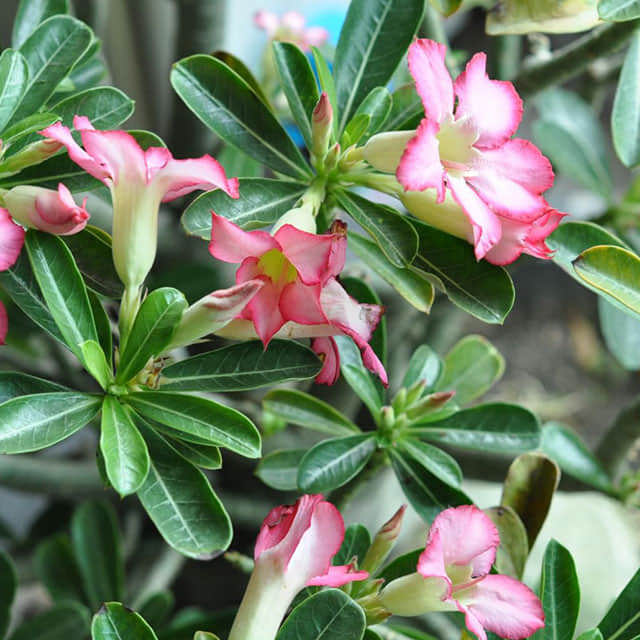
Adenium obesum Drooping Leaves
eco Drooping Leaves

Adenium obesum – Drooping Leaves

Why does your Adenium obesum have drooping leaves? Diagnose the cause and fix it with our step-by-step guide.

search Possible Causes

error

Overwatering and Root Rot

Adenium obesum is a succulent that stores water in its caudex; excessive moisture causes the roots to suffocate and decay, preventing water transport to leaves. This leads to sudden wilting even if the soil feels moist.

Very Common
lightbulb
How to confirm: Gently squeeze the caudex to see if it feels soft or mushy, which indicates advanced rot.
build How to fix it
shopping_cart Recommended Products
1 Immediately remove the plant from the pot and inspect the roots for any mushy, black, or foul-smelling decay; prune away all rot using sterilized tools.
2 Repot the Adenium in a fresh, highly porous, and well-draining substrate to ensure oxygen reaches the roots and prevent future moisture buildup.
3 Use a moisture meter to monitor the soil, ensuring you only water when the medium is completely dry to avoid suffocating the caudex.
error

Underwatering/Drought Stress

As a desert species, while drought-tolerant, extreme dehydration causes the plant to sacrifice leaf turgidity to protect the caudex. The leaves will lose firmness and hang limply.

Very Common
lightbulb
How to confirm: Check the soil moisture deep within the pot; if it is bone dry and pulling away from the edges, the plant needs water.
build How to fix it
shopping_cart Recommended Products
1 Immediately check the soil moisture level using a probe to confirm the depth of dehydration.
2 Thoroughly soak the soil with water until it drains from the bottom, ensuring the root ball is fully saturated.
3 Ensure the plant is in a well-draining container to prevent the water from sitting and causing root rot after the drought period.
warning

Temperature Shock or Cold Stress

Adeniums are tropical plants that cannot tolerate temperatures below 50°F (10°C). Sudden drops in temperature cause metabolic slowdown and leaf drooping as the plant enters a stress response.

Common
lightbulb
How to confirm: Check if the plant has been recently moved near a drafty window or exposed to nighttime temperature drops.
build How to fix it
shopping_cart Recommended Products
1 Immediately move the plant to a warmer environment, ensuring temperatures remain consistently above 50°F (10°C) to stop the metabolic slowdown.
2 Avoid placing the plant near cold drafts, windows, or air conditioning vents that could trigger further temperature fluctuations.
3 Monitor soil moisture closely with a moisture meter, as cold stress can reduce the plant's water uptake and lead to root rot if the soil remains too wet.
warning

Nutrient Deficiency (Nitrogen)

A lack of nitrogen prevents the production of chlorophyll and maintains cell structure, leading to weakened, drooping foliage. This is common in Adeniums grown in depleted, sandy soils for long periods.

Common
lightbulb
How to confirm: Observe if the leaves are also turning pale yellow before they begin to droop.
build How to fix it
shopping_cart Recommended Products
1 Apply a nitrogen-rich liquid fertilizer to boost chlorophyll production and restore leaf structure.
2 Check the soil moisture levels with a meter to ensure the drooping isn't actually caused by overwatering or dehydration.
3 Refresh the growing medium with a new, nutrient-dense potting mix to replenish depleted soil nutrients.
local_hospital All symptoms eco All plants with drooping leaves
favorite