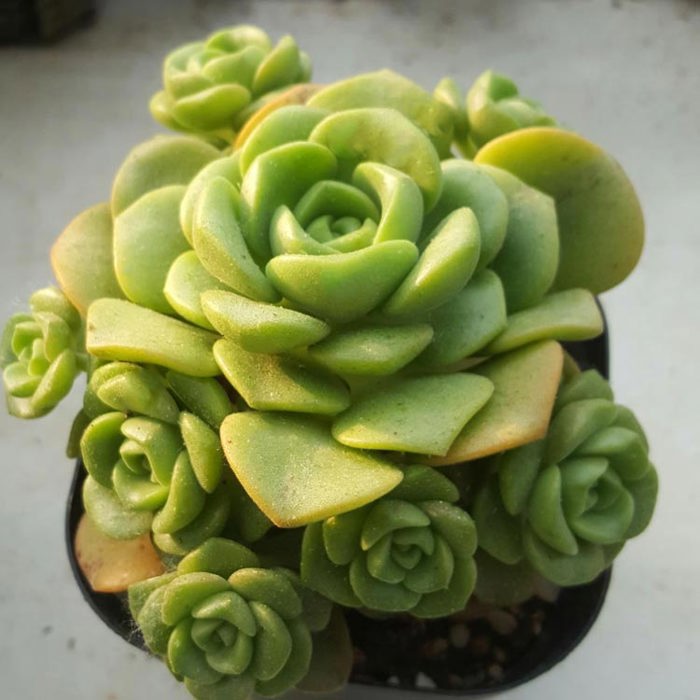
Aeonium Lilypad Yellow Leaves
eco Yellow Leaves

Aeonium Lilypad – Yellow Leaves

Why does your Aeonium Lilypad have yellow leaves? Diagnose the cause and fix it with our step-by-step guide.

pets Pet Friendly

search Possible Causes

error

Overwatering and Root Rot

Aeoniums are succulents that store water in their leaves; excessive moisture causes the roots to suffocate and rot, leading to chlorosis (yellowing) as the plant can no longer transport nutrients.

Very Common
lightbulb
How to confirm: Gently squeeze a stem or check the base of the rosette for mushy, dark brown tissue.
build How to fix it
shopping_cart Recommended Products
1 Immediately remove the plant from its current container and discard any mushy, black, or foul-smelling roots to stop the spread of rot.
2 Repot the Aeonium in a well-draining, gritty substrate and use a pot with drainage holes to prevent water pooling.
3 Monitor the soil moisture levels closely using a meter to ensure the medium is completely dry before watering again.
warning

Nutrient Deficiency (Nitrogen)

A lack of nitrogen prevents the production of chlorophyll in the older, lower leaves of the Lilypad rosette, causing them to turn pale yellow before eventually dropping.

Common
lightbulb
How to confirm: Observe if the yellowing is progressing from the bottom leaves upward while new growth remains green.
build How to fix it
shopping_cart Recommended Products
1 Apply a nitrogen-rich organic fertilizer to boost chlorophyll production and green up the foliage.
2 Monitor the soil moisture levels to ensure nitrogen is being delivered effectively without causing root rot.
3 Prune away the most severely yellowed lower leaves to prevent potential rot from spreading to the healthy rosette.
warning

Temperature Stress (Heat Exhaustion)

While Aeoniums enjoy mild weather, extreme summer heat can cause the plant to go into a semi-dormant state where leaves lose pigment and turn yellowish or pale.

Common
lightbulb
How to confirm: Check if the yellowing coincided with a recent period of intense direct sunlight or high temperatures above 85°F (29°C).
build How to fix it
shopping_cart Recommended Products
1 Move the plant to a cooler, shaded location to protect it from direct afternoon sun and reduce heat absorption.
2 Monitor soil moisture levels closely to ensure the plant remains hydrated without becoming waterlogged during its dormant period.
3 Apply a light mulch or top dressing to help regulate soil temperature and retain moisture around the roots.
warning

Pest Infestation (Mealybugs)

Small, sap-sucking insects like mealybugs feed on the succulent tissues of the Aeonium, secreting honeydew and causing leaves to lose their vibrant green color and turn yellow.

Common
lightbulb
How to confirm: Inspect the crevices between the fleshy leaves for tiny white, cottony clusters.
build How to fix it
shopping_cart Recommended Products
1 Inspect the crevices of the Aeonium leaves for white, cottony clusters and treat the infestation immediately with an organic insecticide spray.
2 Gently wipe away visible insects with a cotton swab dipped in isopropyl alcohol to prevent further sap-sucking damage.
3 Monitor the soil moisture levels to ensure the plant is not also suffering from overwatering, which can exacerbate yellowing leaves.

Other Aeonium Lilypad problems

Your plant might also be experiencing one of these issues:

local_hospital All symptoms eco All plants with yellow leaves
favorite