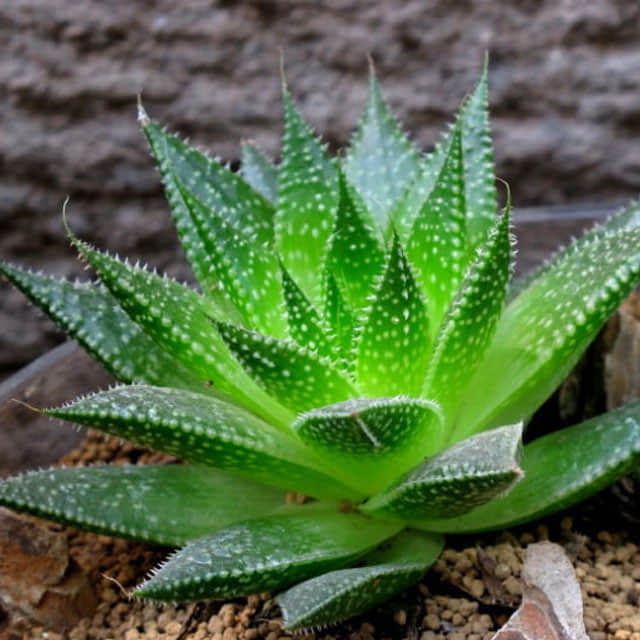
Why does your Aloe aristata have yellow leaves? Diagnose the cause and fix it with our step-by-step guide.
Aloe aristata is a succulent that requires well-draining soil; excessive moisture causes the roots to suffocate, leading to yellowing of the lower leaves. As the root system decays, the plant loses its ability to transport water and nutrients upward.
A lack of nitrogen prevents the production of chlorophyll, causing older, outer leaves to turn a pale yellow. This is common in Aloe aristata when grown in depleted or overly leached sandy substrates over long periods.
While they love light, sudden exposure to intense, direct midday sun can scorch the fleshy leaves of this species. This causes localized yellowing or bleaching of the leaf surfaces that were previously in the shade.
Extreme cold temperatures below 50°F (10°C) can shock the cellular structure of Aloe aristata, leading to chlorosis. This physiological stress causes the plant to lose pigment as a defense mechanism against freezing.
Your plant might also be experiencing one of these issues:

 English
 Italiano