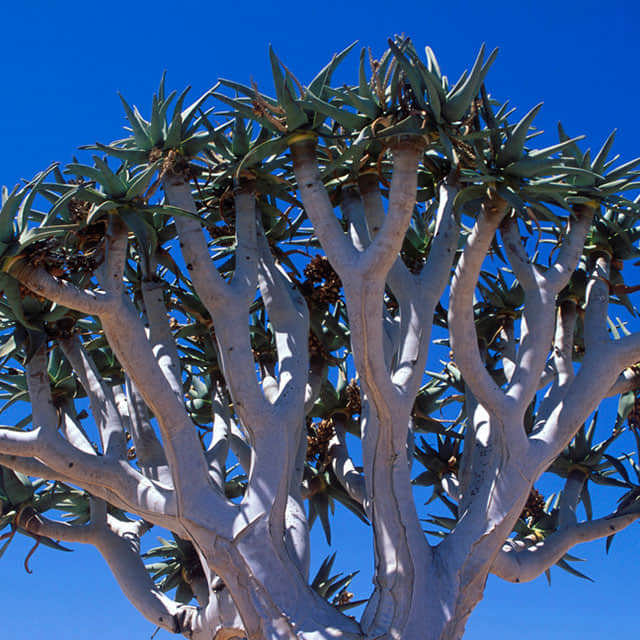
Why does your Aloe dichotoma have tiny black flies? Diagnose the cause and fix it with our step-by-step guide.
The larvae of these flies thrive in the moist, organic-rich substrate that Aloe dichotoma requires for nutrients but hates for moisture. The adults emerge to lay eggs in the top layer of soil, where larvae feed on organic matter and fine root hairs.
While not the flies themselves, chronic overwatering creates the anaerobic, damp environment that attracts fungus gnats and can lead to soft, decaying tissue in the succulent's stem. This rot provides a perfect breeding ground for fly larvae.
If there is decomposing leaf litter or old potting soil within the Aloe's pot, it acts as a food source for flies. The breakdown of this material releases CO2 and moisture, attracting various small dipterans.
Your plant might also be experiencing one of these issues:

 English
 Italiano