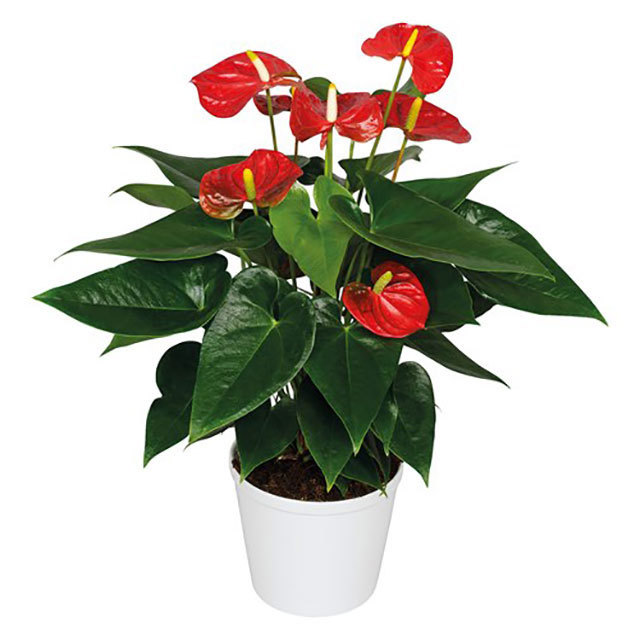
Why does your Anthurium andraeanum Beliza have yellow leaves? Diagnose the cause and fix it with our step-by-step guide.
Anthurium andraeanum is highly sensitive to stagnant water. Excessive moisture in the potting medium deprives roots of oxygen, leading to fungal pathogens like Phytophthora that cause foliage to turn yellow and eventually collapse.
As a fast-growing tropical plant, Beliza requires consistent nitrogen. A lack of available nitrogen prevents the formation of chlorophyll, resulting in an overall chlorosis that typically starts with older, lower leaves turning yellow.
This cultivar thrives in high humidity (above 60%). Low ambient humidity causes moisture to transpire too quickly from the leaf margins, leading to stress-induced yellowing and crispy edges.
Anthuriums are tropical perennials that cannot tolerate temperatures below 60°F (15°C). Exposure to cold drafts or sudden drops in temperature can cause metabolic disruption and rapid leaf yellowing.
Your plant might also be experiencing one of these issues:

 English
 Italiano