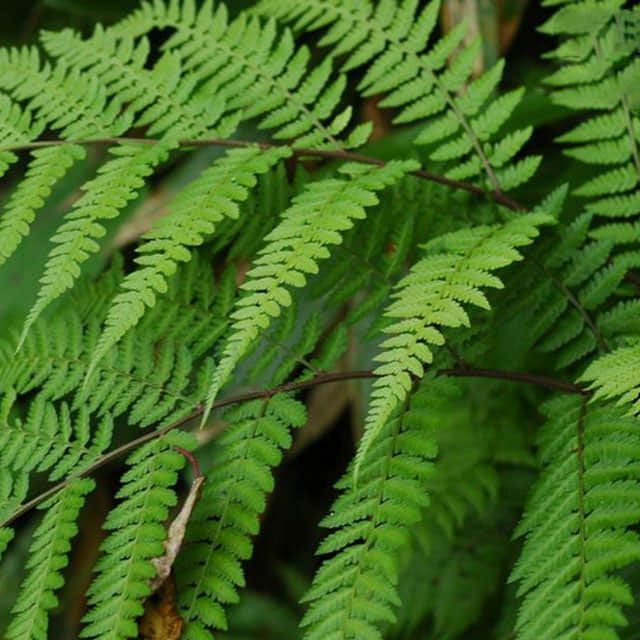
Athyrium filix-femina Yellow Leaves
eco Yellow Leaves

Athyrium filix-femina – Yellow Leaves

Why does your Athyrium filix-femina have yellow leaves? Diagnose the cause and fix it with our step-by-step guide.

pets Pet Friendly

search Possible Causes

error

Low Humidity/Dry Air

Lady Ferns require high ambient humidity; dry air causes the frond tips and edges to turn yellow and eventually crisp.

Very Common
lightbulb
How to confirm: Check if the yellowing is primarily located on the edges of the fronds during periods of low indoor humidity.
build How to fix it
shopping_cart Recommended Products
1 Increase ambient humidity around the fern by using a pebble tray or a humidifier to prevent frond edges from crisping.
2 Regularly mist the foliage with a fine mist to provide immediate moisture to the leaves.
3 Monitor soil moisture levels to ensure the substrate remains consistently moist but not waterlogged.
error

Inconsistent Soil Moisture

As moisture-loving ferns, extreme drying of the substrate leads to chlorosis (yellowing) as the plant enters survival mode.

Very Common
lightbulb
How to confirm: Stick your finger one inch into the soil to see if it has become bone-dry between waterings.
build How to fix it
shopping_cart Recommended Products
1 Check the current moisture levels of the substrate to identify if the soil is currently too dry or too wet.
2 Apply a consistent watering schedule to ensure the soil remains damp but not waterlogged, as Lady Ferns require stable moisture.
3 Consider using a self-watering system or moisture-retaining amendments like sphagnum moss to prevent the substrate from drying out between waterings.
warning

Nutrient Deficiency (Nitrogen)

A lack of nitrogen in well-draining fern soil can cause older, lower fronds to turn a uniform pale yellow.

Common
lightbulb
How to confirm: Observe if the yellowing starts on the oldest fronds at the base of the plant while new growth remains green.
build How to fix it
shopping_cart Recommended Products
1 Apply a nitrogen-rich liquid fertilizer to the soil to restore chlorophyll production in the older fronds.
2 Amend the existing potting medium with organic worm castings to provide a slow-release source of nitrogen and beneficial microbes.
3 Monitor soil moisture levels using an analog meter to ensure the nitrogen-rich nutrients are being delivered without causing root rot.
warning

Root Rot (Overwatering)

If the soil stays saturated, oxygen is pushed out, causing roots to decay and preventing the fern from transporting nutrients to the fronds.

Common
lightbulb
How to confirm: Gently lift the fern from its pot to check if the rhizomes or roots feel soft, black, or slimy.
build How to fix it
shopping_cart Recommended Products
1 Immediately stop watering and allow the soil to dry out significantly to restore oxygen to the root zone.
2 Repot the fern in a well-draining, airy medium like a mix containing perlite or horticultural pumice to prevent future saturation.
3 Inspect the roots and prune away any mushy, black, or foul-smelling decayed sections using sterilized tools.

Other Athyrium filix-femina problems

Your plant might also be experiencing one of these issues:

local_hospital All symptoms eco All plants with yellow leaves
favorite