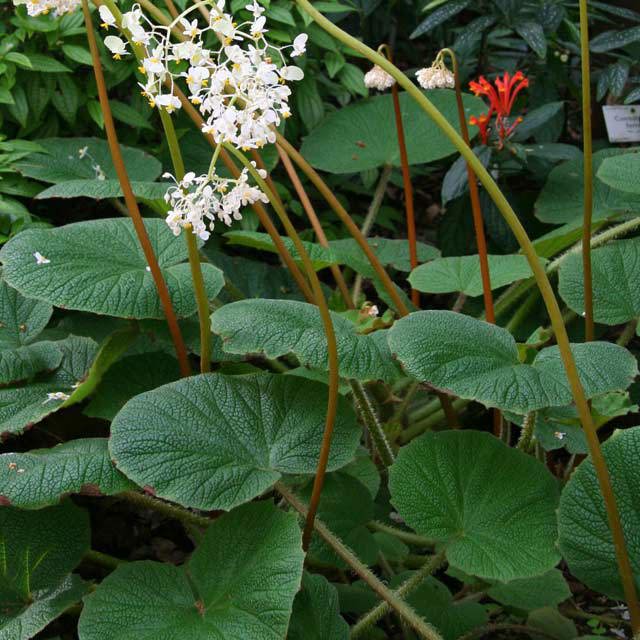
Why does your Begonia megalophyllaria have yellow leaves? Diagnose the cause and fix it with our step-by-step guide.
Begonia megalophyllaria is highly susceptible to fungal pathogens like Pythium when soil remains saturated. Excessive moisture deprives the large, delicate leaves of oxygen, leading to chlorosis (yellowing) and eventual leaf drop.
As a fast-growing species with large foliage, this Begonia has a high demand for nutrients. A lack of nitrogen prevents chlorophyll production, causing older leaves to turn uniformly yellow starting from the bottom of the plant.
While they enjoy bright light, direct afternoon sun can scorch the large leaf surfaces, causing them to yellow and turn translucent. Conversely, extreme low light prevents the plant from maintaining its metabolic processes.
This species thrives in stable, humid tropical environments. Sudden drops in temperature, especially below 55°F (13°C), can shock the plant's vascular system, resulting in rapid yellowing of the leaf blades.
Your plant might also be experiencing one of these issues:

 English
 Italiano