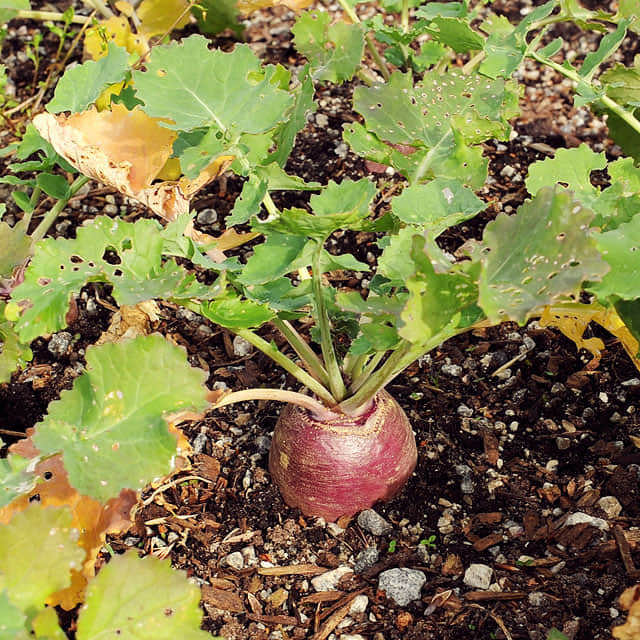
Why does your Brassica napobrassica have fine webbing? Diagnose the cause and fix it with our step-by-step guide.
Spider mites thrive in warm, dry conditions and feed on the undersides of Brassica leaves, secreting silk that creates characteristic fine webbing. This feeding action causes stippling (tiny white dots) on the foliage, eventually leading to leaf yellowing and necrosis.
While larvae damage roots, adult beetles can feed on the foliage of Brassica crops; in some stages or secondary infestations, silk-like traces or debris can be mistaken for webbing. They often leave irregular holes in the leaves alongside the web-like appearance of feeding sites.
In very high humidity, certain fungal pathogens can produce visible mycelium that looks like fine, white web-like structures on the surface of the rutabaga leaves. This is often a precursor to more serious diseases like Downy Mildew if conditions remain damp.
Your plant might also be experiencing one of these issues:

 English
 Italiano



