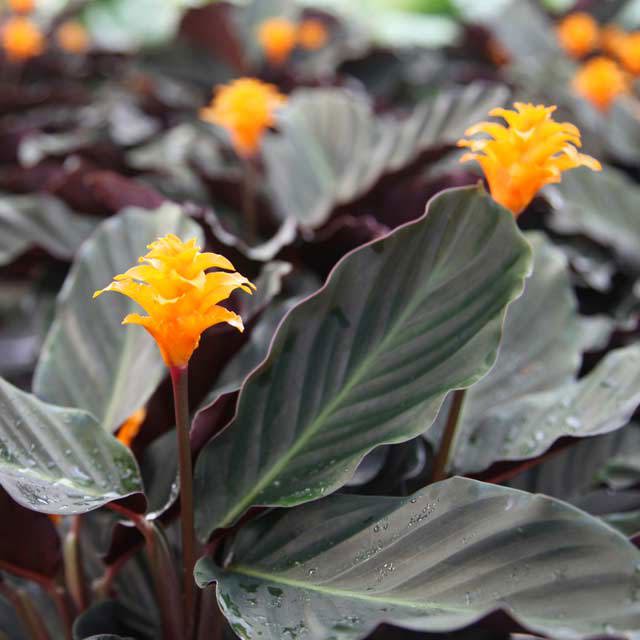
Why does your Calathea crocata have drooping leaves? Diagnose the cause and fix it with our step-by-step guide.
Pet FriendlyCalathea crocata is highly sensitive to dry air; when humidity drops below 50%, the plant loses moisture faster than the roots can replace it, causing turgor pressure to fail in the leaves. This often manifests as soft, limp foliage before leaf edges begin to brown.
While they dislike drought, overwatering leads to compacted, anaerobic soil that suffocates the roots. This prevents the plant from transporting water to the leaves, resulting in drooping despite the presence of moisture.
As a tropical species, Calathea crocata is susceptible to sudden drops in temperature or cold drafts from air conditioning. Cold stress disrupts metabolic processes and causes the leaves to lose structural integrity.
Calatheas are notorious for sensitivity to fluoride, chlorine, and mineral salts found in municipal tap water. The buildup of these minerals in the substrate can cause osmotic stress, leading to wilting and leaf tip necrosis.
Your plant might also be experiencing one of these issues:

 English
 Italiano