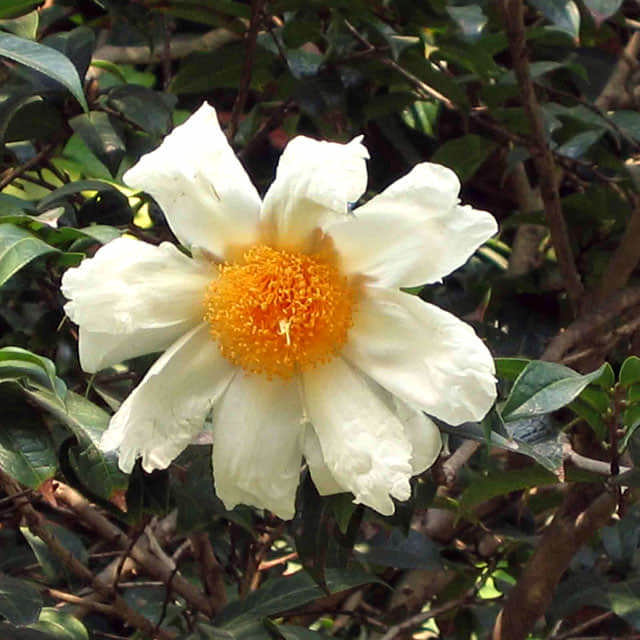
Camellia granthamiana Fine Webbing
eco Fine Webbing

Camellia granthamiana – Fine Webbing

Why does your Camellia granthamiana have fine webbing? Diagnose the cause and fix it with our step-by-step guide.

search Possible Causes

error

Two-Spotted Spider Mite Infestation

Spider mites thrive in the warm, dry conditions often experienced by Camellia granthamiana. They pierce individual plant cells to suck out nutrients, leaving behind fine silk webbing as they create protective colonies on the undersides of leaves.

Very Common
lightbulb
How to confirm: Hold a white piece of paper under a leaf and tap the leaf sharply to see if tiny crawling specks fall onto the paper.
build How to fix it
shopping_cart Recommended Products
1 Apply an organic miticide or insecticide to the plant, ensuring you thoroughly spray the undersides of the leaves where the mites reside.
2 Increase local humidity around the plant and avoid letting the soil dry out completely, as spider mites thrive in hot, arid environments.
3 Prune and dispose of heavily infested or dead foliage to reduce the mite population and prevent further spread.
warning

Broad Mites

While they do not produce large webs, broad mites can cause leaf distortion and a fine, dusty appearance that may be mistaken for webbing. In Camellia species, this often manifests as stunted new growth or curling leaves.

Common
lightbulb
How to confirm: Examine the newest, most tender growth for puckering, bronzing, or abnormal leaf shape.
build How to fix it
shopping_cart Recommended Products
1 Apply an organic insecticide/miticide spray to the plant to eliminate the broad mite population and control any secondary fungal issues.
2 Prune and dispose of any heavily distorted or stunted new growth to prevent the mites from spreading to healthy parts of the Camellia.
3 Monitor the plant closely using a moisture meter to ensure the soil remains consistently moist but not waterlogged, as stress can exacerbate mite damage.
warning

Environmental Stress (Low Humidity)

Camellia granthamiana prefers higher humidity levels; extremely dry air can cause leaves to become brittle and sometimes trap dust or debris in micro-crevices, mimicking a webbed appearance.

Common
lightbulb
How to confirm: Check if the edges of the leaves are browning or if the plant is located near a heat source or dry air vent.
build How to fix it
shopping_cart Recommended Products
1 Increase local humidity around the plant to prevent leaves from becoming brittle and to eliminate the appearance of trapped debris.
2 Use a pebble tray or a humidifier to maintain a more stable, moist environment for the Camellia.
3 Gently wipe the leaves with a damp cloth to remove any dust or debris that may be mimicking webbing.

Other Camellia granthamiana problems

Your plant might also be experiencing one of these issues:

local_hospital All symptoms eco All plants with fine webbing
favorite


