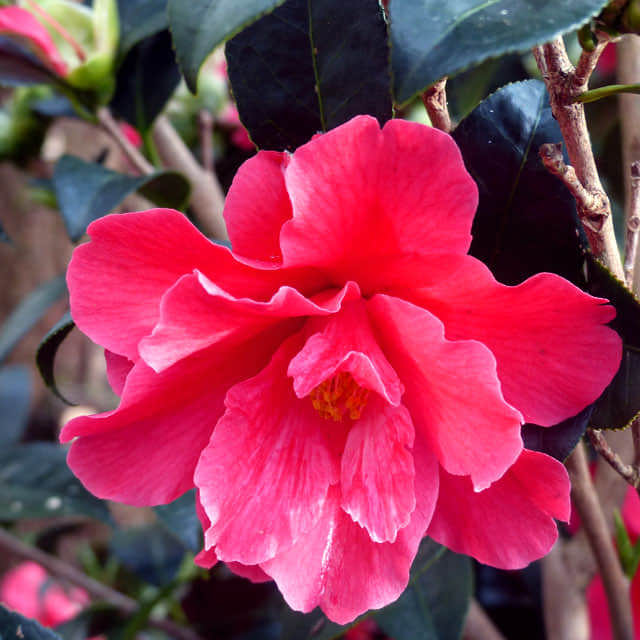
Camellia x maliflora White Powder
eco White Powder

Camellia x maliflora – White Powder

Why does your Camellia x maliflora have white powder? Diagnose the cause and fix it with our step-by-step guide.

search Possible Causes

error

Powdery Mildew

This is the most common cause of white, flour-like patches on Camellia leaves. It thrives in high humidity and poor air circulation around the dense foliage of Maliflora varieties.

Very Common
lightbulb
How to confirm: Check if the white spots can be wiped off easily with your finger and if they appear primarily on the leaf surfaces.
build How to fix it
shopping_cart Recommended Products
1 Apply an organic fungicide to the affected leaves to eliminate the powdery mildew fungus and prevent further spread.
2 Improve air circulation around the dense foliage by pruning crowded branches and ensuring the plant is not in a stagnant, high-humidity area.
3 Remove and dispose of heavily infected leaves to prevent fungal spores from contaminating the rest of the plant.
warning

Mealybugs

These sap-sucking insects produce a white, cottony waxy secretion that can resemble powder. They typically cluster in the axils where the leaves meet the stem.

Common
lightbulb
How to confirm: Inspect the undersides of leaves and stem junctions for tiny, slow-moving white insects or sticky residue (honeydew).
build How to fix it
shopping_cart Recommended Products
1 Treat the plant with an organic insecticide spray to eliminate the mealybug infestation and kill existing insects and larvae.
2 Manually remove visible white cottony clusters using a cotton swab dipped in isopropyl alcohol to prevent further spreading.
3 Inspect the leaf axils and stems regularly to ensure no new pests are developing in the crevices.
warning

Calcium Deficiency (Nutrient Imbalance)

In certain soil pH conditions, a lack of calcium can cause leaf tips to turn white or develop chlorotic patches that appear as a pale dustiness.

Common
lightbulb
How to confirm: Examine if the white patches are strictly localized to the margins/tips of new growth rather than surface-level spots.
build How to fix it
shopping_cart Recommended Products
1 Apply a calcium and magnesium supplement to the soil to correct the nutrient imbalance and strengthen cell walls.
2 Monitor the soil pH to ensure it remains in the acidic range (5.5–6.5) so that calcium remains bioavailable to the plant.
3 Check the soil moisture levels regularly to prevent the nutrient fluctuations that often trigger calcium deficiencies.

Other Camellia x maliflora problems

Your plant might also be experiencing one of these issues:

local_hospital All symptoms eco All plants with white powder
favorite