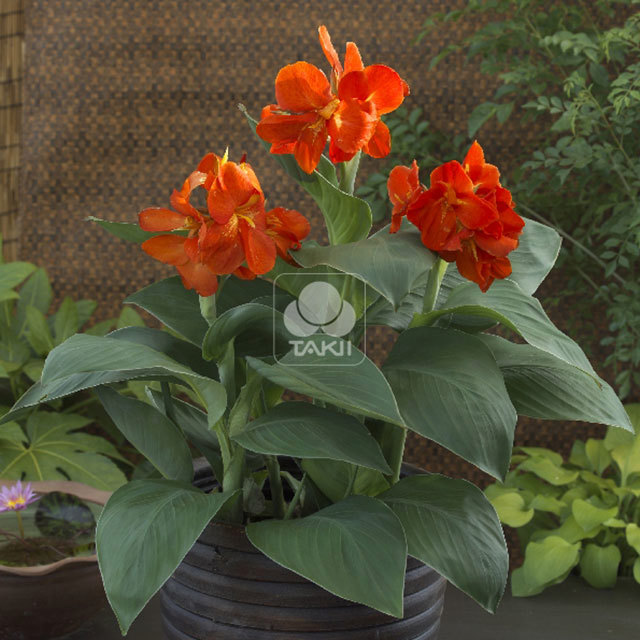
Why does your Canna South Pacific F1 Scarlet have leggy stems? Diagnose the cause and fix it with our step-by-step guide.
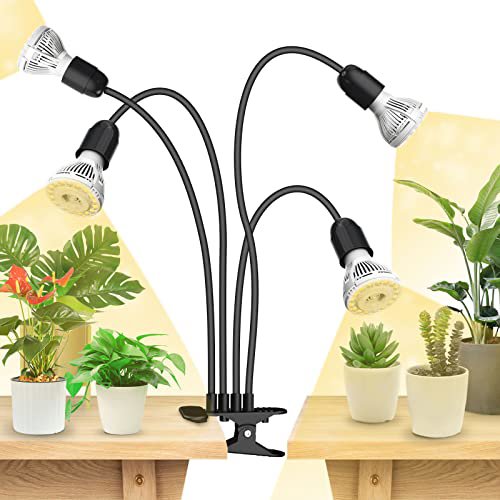
Canna lilies require full sun (at least 6-8 hours) to develop sturdy, upright stems. When light is low, the plant undergoes etiolation, stretching its leaves rapidly toward the nearest light source, resulting in weak, spindly growth.
Excessive nitrogen can promote rapid, soft vegetative growth that lacks structural integrity, while a deficiency can lead to weak stem development. In South Pacific F1 varieties, high-nitrogen fertilizers often trigger lush but structurally 'floppy' foliage.
Constant moisture in the rhizome zone can cause root stress, reducing the plant's ability to support its large leaf mass. This leads to weakened cellular structure in the stems, making them appear elongated and unable to hold their weight.
As Canna rhizomes expand, they can become root-bound in containers. When the root mass lacks space to anchor the plant and absorb nutrients, the upward growth becomes stretched and less robust.
Your plant might also be experiencing one of these issues:

 English
 Italiano