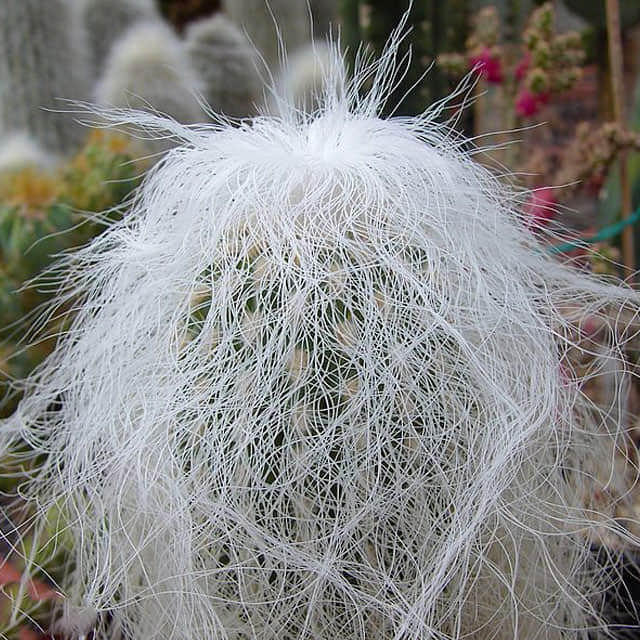
Why does your Cephalocereus senilis have fine webbing? Diagnose the cause and fix it with our step-by-step guide.
The presence of fine webbing is a classic sign of spider mites (Tetranychidae), which thrive in the warm, dry conditions often preferred by Cephalocereus senilis. These pests pierce the cactus skin to suck out fluids, leading to chlorotic spotting and eventual desiccation of the white cephalium hairs.
A specific subspecies of mite that is highly common in indoor cacti environments. They create dense webs to protect themselves and their eggs, often causing the 'Old Man' hairs to look clumped or dirty.
While Cephalocereus senilis is drought-tolerant, extreme drops in humidity can trigger mite outbreaks as they reproduce rapidly in stagnant, dry air. This stress weakens the cactus's natural defenses against pest colonization.
Your plant might also be experiencing one of these issues:

 English
 Italiano

