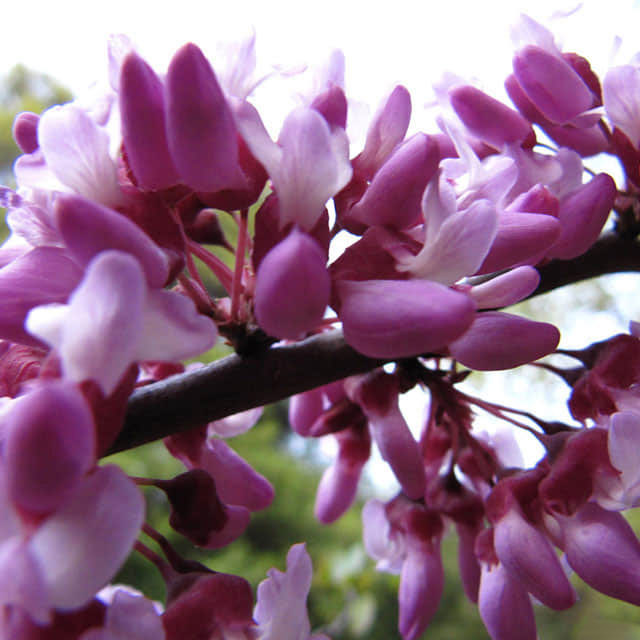
Why does your Cercis occidentalis have sudden leaf drop? Diagnose the cause and fix it with our step-by-step guide.
Pet FriendlyAs a species adapted to semi-arid environments, Cercis occidentalis can enter a defensive state of dormancy if soil moisture drops too low during the growing season. Rapid dehydration triggers the abscission layer in leaf petioles to conserve water for the trunk and root system.
Sudden late spring frosts or intense heat waves can cause physiological shock in Western Redbuds. The plant drops leaves to protect its vascular tissue from cellular damage caused by thermal instability.
While drought-tolerant, Cercis occidentalis is highly susceptible to oxygen deprivation in heavy, poorly draining soils. Excess moisture at the root zone leads to fungal pathogens that compromise the tree's ability to transport water, resulting in leaf drop.
Heavy populations of aphids feeding on the tender new growth of Redbuds can deplete the tree's energy reserves and cause leaves to wilt and drop. The presence of sticky honeydew or curled leaves is a primary indicator.

 English
 Italiano