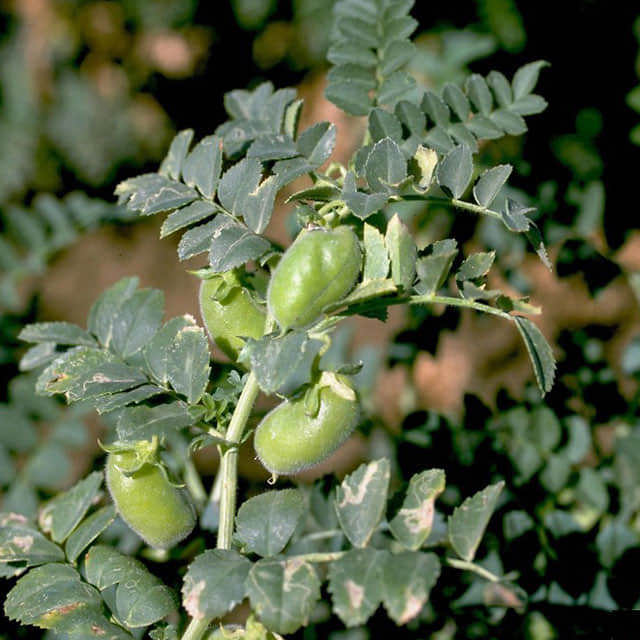
Why does your Cicer arietinum have white powder? Diagnose the cause and fix it with our step-by-step guide.
This is the most common cause of white, flour-like patches on chickpea leaves. The fungus colonizes the leaf surface, consuming nutrients and potentially causing premature senescence of the foliage.
Small white insects congregating on the underside of chickpea leaves can create a 'white' appearance from a distance. Their feeding action often leaves behind honeydew, which can lead to secondary sooty mold.
High levels of soluble salts in the soil can manifest as a white crust on the soil surface around the base of the chickpea plant. This inhibits water uptake and causes physiological stress to the crop.
Your plant might also be experiencing one of these issues:

 English
 Italiano