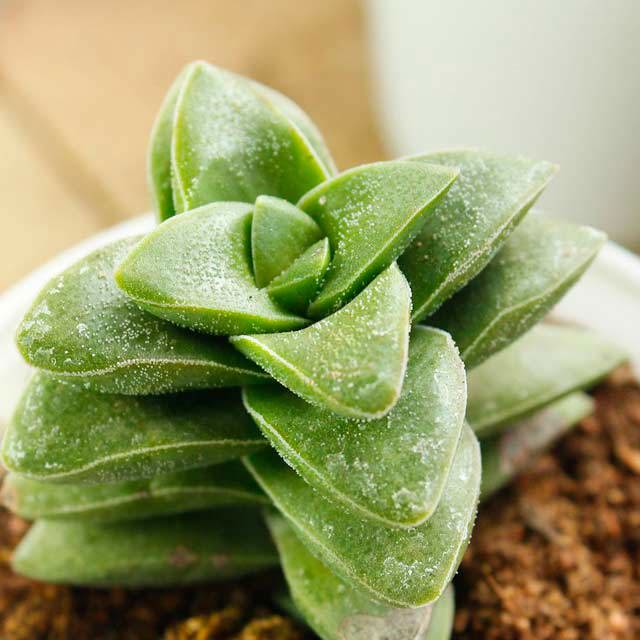
Crassula ovata Springtime White Cottony Spots
eco White Cottony Spots

Crassula ovata Springtime – White Cottony Spots

Why does your Crassula ovata Springtime have white cottony spots? Diagnose the cause and fix it with our step-by-step guide.

search Possible Causes

error

Mealybugs

These small, soft-bodied insects produce a white, waxy, cotton-like secretion to protect themselves. They feed on the sap of the Crassula ovata, often congregating in the crevices between leaf nodes and stems.

Very Common
lightbulb
How to confirm: Use a cotton swab dipped in rubbing alcohol to dab the spots; if they dissolve and turn brown, it is likely mealybugs.
build How to fix it
shopping_cart Recommended Products
1 Isolate the plant immediately to prevent the mealybugs from spreading to other houseplants.
2 Treat the infestation by spraying the plant with an organic insecticide/fungicide to kill the insects and their waxy coatings.
3 Use a cotton swab dipped in isopropyl alcohol to manually remove visible white cottony clusters from the crevices of the stems and leaves.
warning

Cottony Scale

Similar to mealybugs, scale insects can develop a white, fuzzy appearance as they mature. They attach themselves firmly to the succulent stems and can cause leaves to yellow or drop due to sap depletion.

Common
lightbulb
How to confirm: Inspect the stems closely to see if the white spots are stationary, hard bumps attached to the plant tissue.
build How to fix it
shopping_cart Recommended Products
1 Treat the plant with an organic insecticide spray to eliminate the scale insects and their eggs.
2 Manually remove visible white cottony clusters using a cotton swab dipped in isopropyl alcohol to prevent further sap depletion.
3 Inspect the surrounding area and nearby plants to ensure the infestation hasn't spread.
warning

Sclerotinia (White Mold)

While less common on succulents than other plants, certain fungal pathogens can manifest as white, fuzzy mycelium, especially if the Jade plant has experienced high humidity or poor drainage.

Common
lightbulb
How to confirm: Check if the white patches are accompanied by soft, mushy, or rotting stem tissue near the base of the plant.
build How to fix it
shopping_cart Recommended Products
1 Remove all affected plant tissue and any visible white fuzzy mycelium to prevent the fungus from spreading to healthy parts of the Jade plant.
2 Apply an organic fungicide to the affected area and surrounding foliage to combat the fungal pathogen.
3 Improve air circulation and ensure the plant is in a well-draining medium; consider adding perlite to the soil to prevent the moisture retention that fuels mold growth.
local_hospital All symptoms eco All plants with white cottony spots
favorite

