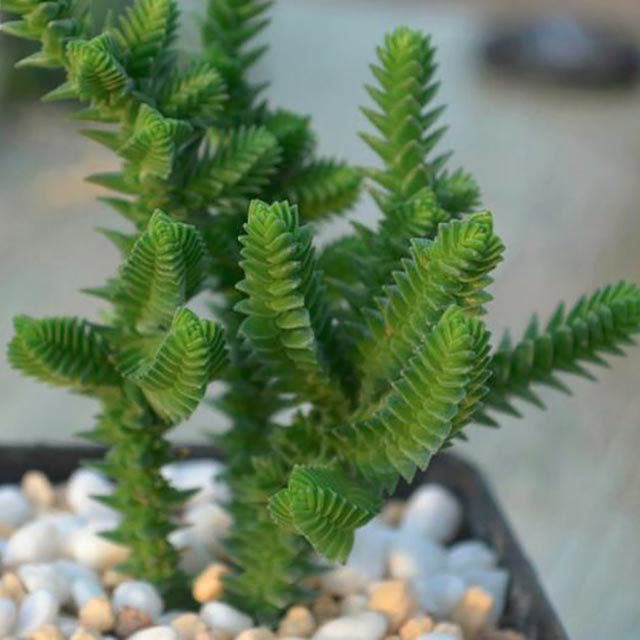
Crassula pyramidalis White Cottony Spots
eco White Cottony Spots

Crassula pyramidalis – White Cottony Spots

Why does your Crassula pyramidalis have white cottony spots? Diagnose the cause and fix it with our step-by-step guide.

search Possible Causes

error

Mealybugs

These sap-sucking insects produce a white, waxy, cottony secretion to protect themselves while feeding on the succulent's stems and leaf axils. In Crassula pyramidalis, infestations often lead to yellowing of the fleshy leaves as the insect drains nutrients.

Very Common
lightbulb
How to confirm: Use a magnifying glass or toothpick to see if the white spots move or are attached to tiny, soft-bodied insects in the crevices of the plant.
build How to fix it
shopping_cart Recommended Products
1 Isolate the plant immediately to prevent the mealybugs from spreading to other succulents in your collection.
2 Treat the infestation by spraying the plant with an organic insecticide/miticide to eliminate the insects and their waxy secretions.
3 Gently wipe away visible cottony clusters using a cotton swab dipped in isopropyl alcohol to kill the pests on contact.
warning

Powdery Mildew

This fungal pathogen manifests as a white, dusty coating on the surface of the leaves. While less common in highly arid succulents, high humidity or poor air circulation around the pyramidal structure can trigger spore germination.

Common
lightbulb
How to confirm: Wipe a leaf with a damp cloth to see if the white substance is easily removed and does not appear to be an organism underneath.
build How to fix it
shopping_cart Recommended Products
1 Treat the affected leaves immediately with an organic fungicide to stop the spread of fungal spores.
2 Improve air circulation around the plant and reduce humidity by ensuring the plant is not in a crowded area.
3 Prune and discard any heavily infected leaves to prevent the pathogen from spreading to healthy tissue.
warning

Cottony Blight (Erwinia/Bacterial)

Certain bacterial soft rots can produce a white, slimy, or fuzzy appearance as the plant tissue breaks down. This is usually accompanied by a foul odor and the structural collapse of the pyramidal leaves.

Common
lightbulb
How to confirm: Check if the white spots are accompanied by mushy, translucent, or decaying leaf tissue.
build How to fix it
shopping_cart Recommended Products
1 Immediately prune and discard all affected leaves and stems that show white, slimy, or fuzzy tissue to prevent the bacterial rot from spreading to healthy parts of the plant.
2 Apply an organic fungicide/bactericide spray to the remaining healthy tissue to help control the spread of the blight.
3 Ensure the plant is in a well-draining medium and avoid overwatering, as excess moisture promotes bacterial soft rot; consider adding perlite to the soil for better aeration.
local_hospital All symptoms eco All plants with white cottony spots
favorite