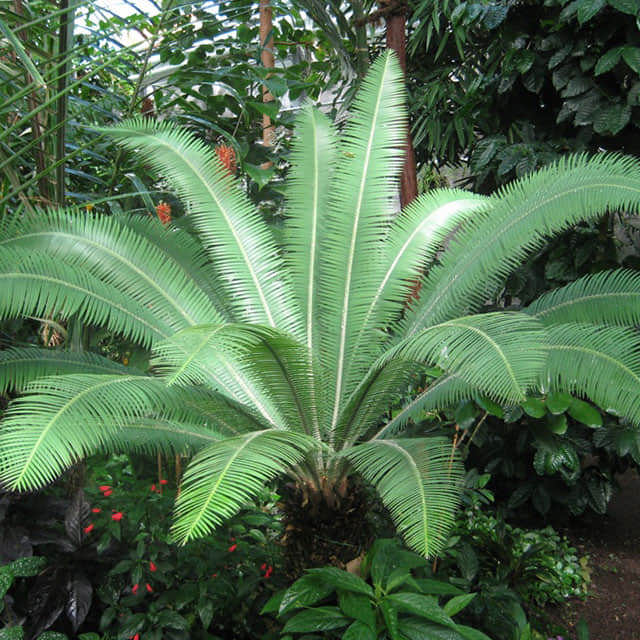
Cycas circinalis Yellow Leaves
eco Yellow Leaves

Cycas circinalis – Yellow Leaves

Why does your Cycas circinalis have yellow leaves? Diagnose the cause and fix it with our step-by-step guide.

search Possible Causes

error

Nutrient Deficiency (Magnesium or Nitrogen)

Cycas circinalis is a heavy feeder and frequently develops chlorosis due to insufficient magnesium or nitrogen in the substrate. Magnesium deficiency typically manifests as yellowing between the veins of older fronds first.

Very Common
lightbulb
How to confirm: Observe if the yellowing starts on the tips or midribs of the oldest, outermost leaves.
build How to fix it
shopping_cart Recommended Products
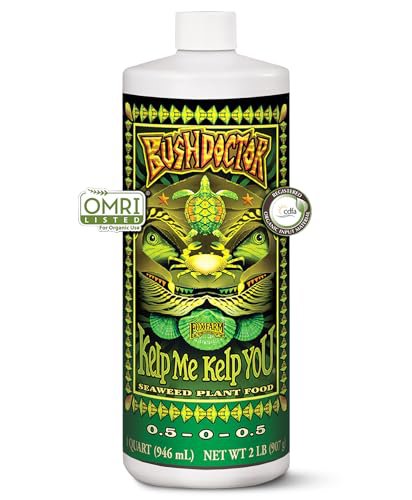
1 Apply a liquid seaweed fertilizer to boost overall nutrient uptake and provide essential trace minerals.
2 Supplement the soil with a nitrogen-rich organic amendment to address potential nitrogen deficiency and promote green foliage.
3 Check the soil moisture levels using an analog meter to ensure the deficiency isn't being exacerbated by improper watering.
error

Improper Watering (Root Stress)

Excessive moisture leads to hypoxia in the root system, causing yellowing across the entire frond. Conversely, extreme drought stress can cause the tips of the circinalis leaflets to turn yellow and then brittle.

Very Common
lightbulb
How to confirm: Stick your finger two inches into the soil to check if it is waterlogged or bone dry.
build How to fix it
shopping_cart Recommended Products
1 Check the soil moisture level immediately using a moisture meter to determine if the roots are currently waterlogged or bone-dry.
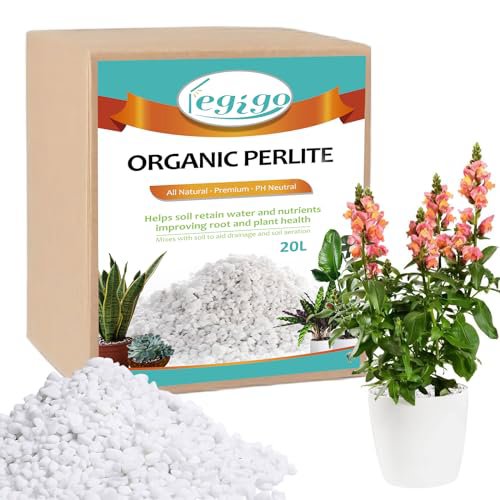
2 If the soil is overly saturated, repot the Cycas circinalis in a well-draining medium amended with perlite to improve aeration and prevent root hypoxia.
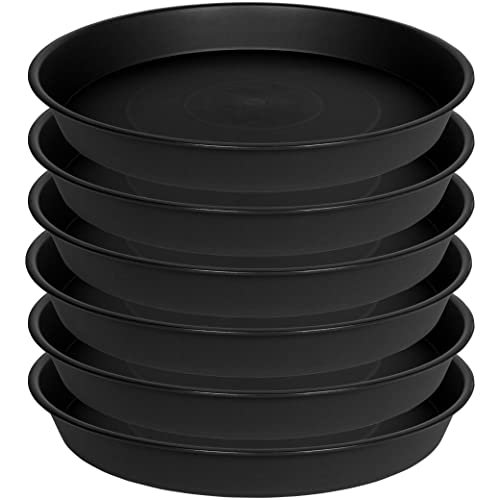
3 Ensure the plant is in a pot with adequate drainage and use a saucer to prevent water from pooling around the base of the trunk.
warning

Salt Accumulation (Salinity Stress)

Accumulation of fertilizer salts or hard water minerals in the potting medium can cause leaf burn and yellowing. This species is sensitive to high concentrations of sodium and chloride in the rhizosphere.

Common
lightbulb
How to confirm: Check for a white, crusty buildup on the soil surface or the edges of the pot.
build How to fix it
shopping_cart Recommended Products
1 Flush the potting medium thoroughly with distilled or rainwater to leach out accumulated mineral salts and sodium.
2 Check the current moisture levels to ensure the soil is not staying waterlogged, which can exacerbate salt toxicity.
3 Repot the plant in fresh, well-draining substrate and consider adding perlite to improve aeration and drainage.
warning

Fungal Root Rot (Phytophthora spp.)

Pathogenic fungi can attack the fleshy roots of Queen Sago Palms in poorly draining soils. This systemic failure prevents water transport, resulting in widespread yellowing and eventual drooping of fronds.

Common
lightbulb
How to confirm: Gently lift the plant from its pot to inspect if the roots are dark, slimy, or foul-smelling.
build How to fix it
shopping_cart Recommended Products
1 Immediately remove the plant from its current container and inspect the roots for mushy, dark, or foul-smelling decay; prune away all infected root tissue using sterilized tools.
2 Repot the Cycas circinalis in a highly well-draining medium, incorporating perlite or horticultural grit to prevent future water stagnation.
3 Apply a fungicide treatment to the root zone and ensure the new pot has excellent drainage, using a saucer to prevent the plant from sitting in excess water.

Other Cycas circinalis problems

Your plant might also be experiencing one of these issues:

local_hospital All symptoms eco All plants with yellow leaves
favorite