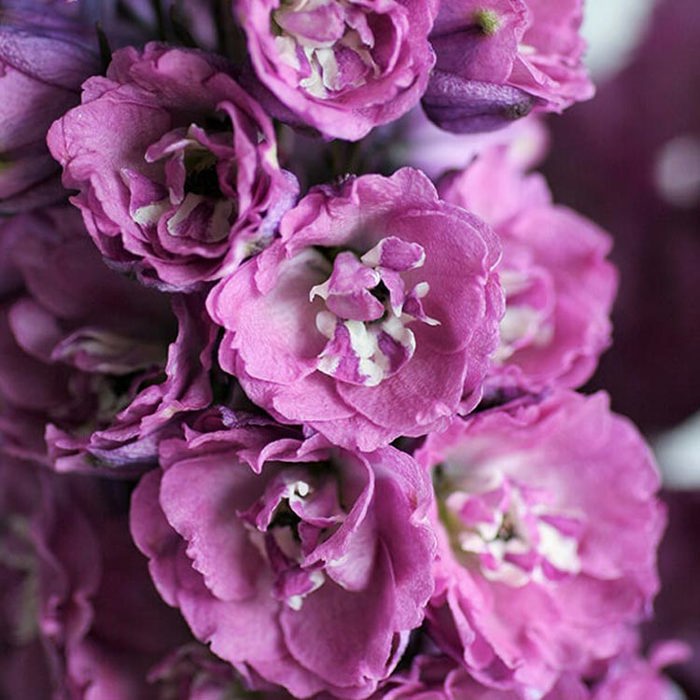
Delphinium Pink Power White Powder
eco White Powder

Delphinium Pink Power – White Powder

Why does your Delphinium Pink Power have white powder? Diagnose the cause and fix it with our step-by-step guide.

search Possible Causes

error

Powdery Mildew

This is the most common cause for white, flour-like patches on Delphinium leaves. It is a fungal pathogen (Erysiphales) that thrives in high humidity and dense foliage where airflow is restricted.

Very Common
lightbulb
How to confirm: Check if the white spots look like a dusting of flour and if they are primarily appearing on the upper surfaces of the leaves.
build How to fix it
shopping_cart Recommended Products
1 Apply an organic fungicide to the affected leaves to eliminate the fungal pathogen and prevent further spread.
2 Prune and dispose of heavily infected foliage to reduce the fungal load and improve air circulation around the plant.
3 Increase airflow around the plant and avoid overhead watering to ensure leaves remain dry, as moisture promotes mildew growth.
warning

Mealybugs

Small, white, cottony masses can resemble powder or mold but are actually clusters of insect eggs or protective wax. These pests feed on the sap of the Larkspur, often hiding in leaf axils.

Common
lightbulb
How to confirm: Inspect the undersides of leaves and stems for tiny, slow-moving insects encased in white, waxy fluff.
build How to fix it
shopping_cart Recommended Products
1 Treat the plant with an organic insecticide spray to eliminate the mealybug clusters and protect healthy tissues.
2 Carefully wipe away visible white cottony masses from leaf axils using a cotton swab dipped in isopropyl alcohol.
3 Inspect surrounding plants and increase airflow to prevent the pests from spreading to new growth.
warning

White Mold (Sclerotinia)

While usually more 'fuzzy' than powdery, certain stages of Sclerotinia can appear as white patches on the stem or leaf base. This is a serious necrotrophic fungus that causes stems to collapse.

Common
lightbulb
How to confirm: Examine the base of the plant for any signs of mushy, decaying tissue or small, black sclerotia (seed-like structures).
build How to fix it
shopping_cart Recommended Products
1 Immediately prune and dispose of all infected stems and leaves to prevent the fungus from spreading to healthy tissue.
2 Apply an organic fungicide to the affected area to control the spread of the mold.
3 Improve air circulation around the plant and avoid overhead watering to reduce the humidity that promotes fungal growth.
local_hospital All symptoms eco All plants with white powder
favorite

