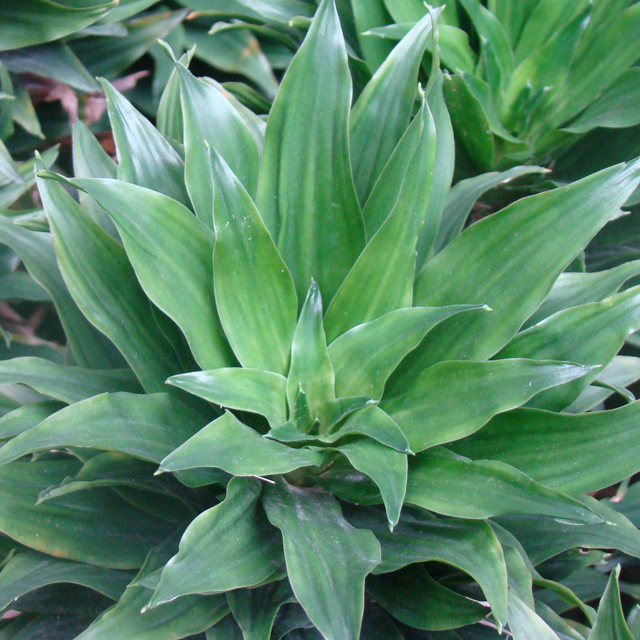
Why does your Dracaena fragrans Compacta have yellow leaves? Diagnose the cause and fix it with our step-by-step guide.
Dracaena fragrans is highly susceptible to root rot if the substrate remains saturated. Excessive moisture prevents oxygen from reaching the roots, causing cellular death that manifests as yellowing leaves, often starting with the older, lower foliage.
Dracaenas are hypersensitive to fluoride, chlorine, and calcium found in municipal tap water. Accumulation of these minerals causes yellowing and characteristic brown leaf margins in the Compacta cultivar.
While adaptable, a lack of sufficient bright indirect light can slow photosynthesis, leading to chlorosis (yellowing) as the plant struggles to maintain its compact structure. Conversely, intense direct sunlight can scorch leaves, turning them yellow then brown.
In a controlled indoor environment, a lack of nitrogen can lead to chlorosis. Because Nitrogen is mobile within the plant, the symptoms typically appear first on the oldest leaves at the base of the stem.
Your plant might also be experiencing one of these issues:

 English
 Italiano