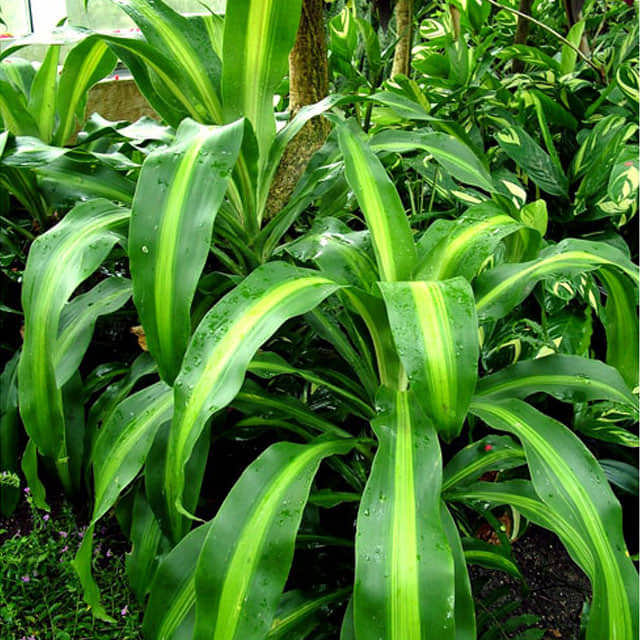
Dracaena fragrans Massangeana Sudden Leaf Drop
eco Sudden Leaf Drop

Dracaena fragrans Massangeana – Sudden Leaf Drop

Why does your Dracaena fragrans Massangeana have sudden leaf drop? Diagnose the cause and fix it with our step-by-step guide.

search Possible Causes

error

Overwatering and Root Rot

Excessive moisture in the substrate leads to anaerobic conditions, causing the roots of the Dracaena to decay. As the root system fails, the plant can no longer support its foliage, resulting in rapid leaf senescence and drop.

Very Common
lightbulb
How to confirm: Gently lift the plant from its pot to check if the roots are dark, slimy, or emit a foul odor.
build How to fix it
shopping_cart Recommended Products
1 Immediately remove the plant from its current container to inspect the roots; discard any mushy, black, or foul-smelling roots and trim the remaining healthy ones.
2 Repot the plant in a fresh, well-draining potting medium and ensure the new container has adequate drainage to prevent water pooling.
3 Use a moisture meter to monitor the substrate, ensuring you only water when the top several inches of soil are completely dry to prevent future overwatering.
error

Temperature Shock or Cold Drafts

Dracaena fragrans is highly sensitive to sudden temperature fluctuations. Exposure to cold drafts from windows or air conditioning vents can trigger a stress response that causes the plant to shed lower leaves rapidly.

Very Common
lightbulb
How to confirm: Check if the plant is positioned directly in the path of an AC vent or near a drafty window.
build How to fix it
shopping_cart Recommended Products
1 Immediately move your Dracaena away from cold drafts, air conditioning vents, or drafty windows to a stable, warm environment.
2 Maintain a consistent room temperature between 65°F and 75°F to prevent further stress and allow the plant to stabilize.
3 Monitor the soil moisture closely during this recovery period to ensure the plant is not being overwatered while in a stressed state.
warning

Improper Humidity Levels

This species thrives in moderate to high humidity; extremely dry indoor air, common in heated homes during winter, can cause the plant to drop leaves as it struggles to maintain transpiration balance.

Common
lightbulb
How to confirm: Observe if the leaf edges are also turning brown and crispy alongside the dropping leaves.
build How to fix it
shopping_cart Recommended Products
1 Increase local humidity around the plant by using a pebble tray or a humidifier to prevent further leaf drop.
2 Mist the foliage regularly with a fine spray to provide immediate moisture to the leaves.
3 Monitor soil moisture levels closely to ensure the plant is not also suffering from overwatering, which can mimic humidity stress.
warning

Fluoride or Mineral Toxicity

Dracaenas are sensitive to fluoride, chlorine, and calcium found in tap water. Accumulation of these salts in the leaf tissue can cause cellular breakdown and premature leaf loss.

Common
lightbulb
How to confirm: Look for yellowing or browning tips on the leaves that preceded the drop.
build How to fix it
shopping_cart Recommended Products
1 Flush the soil thoroughly with distilled water or rainwater to leach out accumulated fluoride, chlorine, and mineral salts.
2 Switch to using distilled water, rainwater, or filtered water for all future watering to prevent further salt buildup.
3 Monitor soil moisture levels closely using a moisture meter to ensure you are not overwatering, which can exacerbate mineral accumulation.

Other Dracaena fragrans Massangeana problems

Your plant might also be experiencing one of these issues:

local_hospital All symptoms eco All plants with sudden leaf drop
favorite