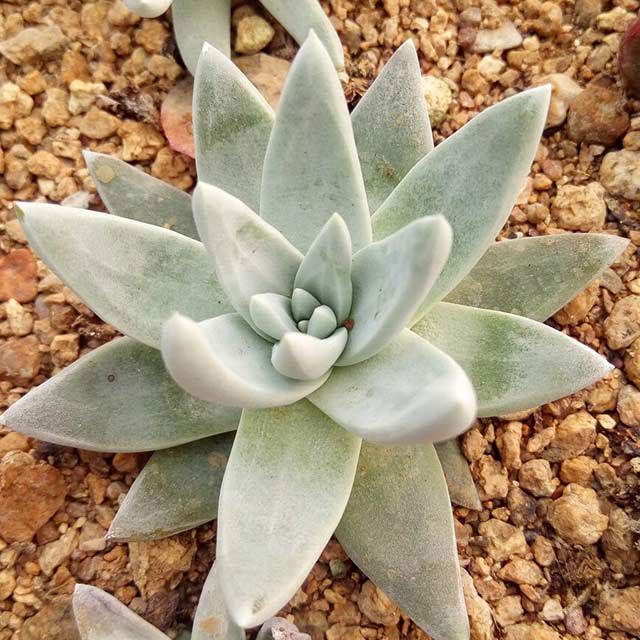
Dudleya greenei Drooping Leaves
eco Drooping Leaves

Dudleya greenei – Drooping Leaves

Why does your Dudleya greenei have drooping leaves? Diagnose the cause and fix it with our step-by-step guide.

search Possible Causes

error

Overwatering and Root Rot

As a succulent native to rocky crevices, Dudleya greenei is highly susceptible to fungal pathogens like Phytophthora if the substrate remains damp. Excessive moisture causes the root system to decay, preventing the plant from transporting water to the leaves.

Very Common
lightbulb
How to confirm: Gently squeeze the base of the leaves; if they feel mushy or detach easily, root rot is likely present.
build How to fix it
shopping_cart Recommended Products
1 Immediately remove the plant from the damp soil and inspect the roots; trim away any mushy, black, or foul-smelling decayed roots using sterilized tools.
2 Repot the Dudleya in a highly porous, well-draining substrate specifically designed for succulents to prevent future moisture retention.
3 Use a moisture meter to monitor the substrate, ensuring you only water when the soil is completely dry to avoid repeat root rot.
error

Extreme Heat Stress and Dehydration

While adapted to coastal California climates, prolonged exposure to temperatures exceeding their tolerance without adequate atmospheric humidity can cause the plant to lose turgor pressure. This results in a loss of structural rigidity in the fleshy leaves.

Very Common
lightbulb
How to confirm: Check if the soil is bone-dry and if the drooping improved after a light misting or evening watering.
build How to fix it
shopping_cart Recommended Products
1 Immediately move the plant to a shaded, cooler location to reduce transpiration and prevent further heat-induced wilting.
2 Check the soil moisture level with a meter to ensure the root zone is hydrated but not waterlogged.
3 Apply a light misting to the surrounding air or use a pebble tray to increase local humidity and help the plant recover turgor pressure.
warning

Pest Infestation (Mealybugs)

Sap-sucking insects like mealybugs feed on the moisture and nutrients within the leaf bases, physically depleting the plant's water reserves. This internal loss of fluid leads to a characteristic wilted appearance.

Common
lightbulb
How to confirm: Inspect the crevices where the leaves meet the stem for small, white, cottony clusters.
build How to fix it
shopping_cart Recommended Products
1 Isolate the plant immediately and treat the infestation with an organic insecticide to kill existing mealybugs and larvae.
2 Carefully wipe away visible mealybugs from the leaf bases using a cotton swab dipped in isopropyl alcohol.
3 Check the soil moisture levels to ensure the plant is not also suffering from dehydration due to the sap loss.
warning

Nutrient Deficiency (Nitrogen/Magnesium)

A lack of essential minerals can impair the cellular structure and photosynthetic capacity of the leaves. In Dudleya species, this often manifests as a loss of leaf stiffness before any visible discoloration appears.

Common
lightbulb
How to confirm: Observe if the drooping is accompanied by pale or chlorotic (yellowing) patches on the older leaves.
build How to fix it
shopping_cart Recommended Products
1 Apply a balanced liquid fertilizer to boost nitrogen and magnesium levels, ensuring the plant receives essential minerals for cellular strength.
2 Supplement the soil with a magnesium-rich additive to specifically address potential magnesium deficiencies and restore leaf stiffness.
3 Monitor the soil moisture levels using an analog meter to ensure that the drooping is not actually caused by underwatering or root stress.

Other Dudleya greenei problems

Your plant might also be experiencing one of these issues:

local_hospital All symptoms eco All plants with drooping leaves
favorite