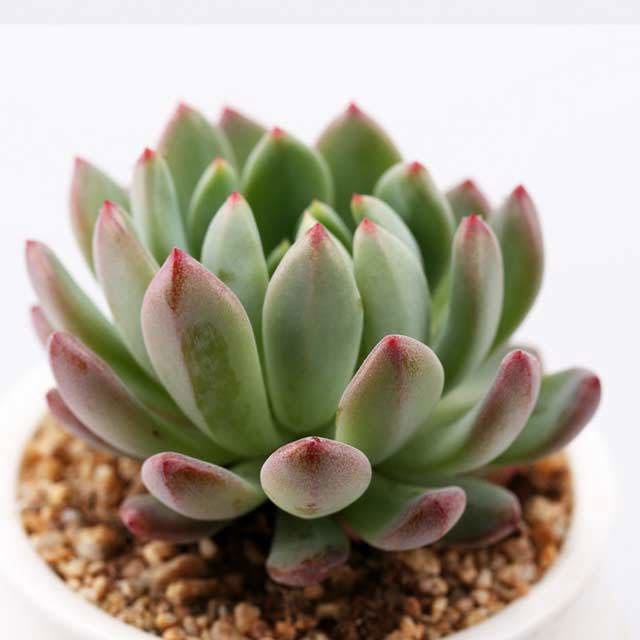
Echeveria Blue Apple Sudden Leaf Drop
eco Sudden Leaf Drop

Echeveria Blue Apple – Sudden Leaf Drop

Why does your Echeveria Blue Apple have sudden leaf drop? Diagnose the cause and fix it with our step-by-step guide.

pets Pet Friendly

search Possible Causes

error

Overwatering and Root Rot

Echeveria are succulents that require well-draining substrate; excess moisture causes the roots to decay, preventing the plant from supporting its own leaves. This leads to leaves turning translucent or mushy before falling off at the slightest touch.

Very Common
lightbulb
How to confirm: Gently tug a leaf to see if it detaches easily and check if the base of the stem feels soft or slimy.
build How to fix it
shopping_cart Recommended Products
1 Immediately remove the plant from its current pot and trim away any mushy, black, or decayed roots using sterilized tools.
2 Repot the Echeveria in a highly porous, well-draining substrate specifically designed for succulents, such as a mix containing perlite or pumice to prevent future water retention.
3 Use a moisture meter to monitor the soil and ensure you only water when the substrate is completely dry to the touch.
error

Temperature Stress (Cold Damage)

Blue Apple Echeveria is sensitive to frost and temperatures below 40°F (4°C). Sudden drops in temperature can cause cell walls to rupture, resulting in rapid leaf drop and blackened spots on the rosette.

Very Common
lightbulb
How to confirm: Check if there has been a recent cold snap or if the plant is sitting near a drafty window.
build How to fix it
shopping_cart Recommended Products
1 Immediately move the plant to a warmer, sheltered location indoors or a greenhouse to prevent further temperature fluctuations.
2 Check the soil moisture with a meter to ensure the cold-damaged roots are not sitting in overly saturated soil, which can lead to rot.
3 Prune away any mushy, blackened, or completely dead leaves using sterilized shears to prevent fungal spread.
warning

Pest Infestation (Mealybugs)

Mealybugs feed on the sap of Echeveria, weakening the plant's structural integrity and causing leaves to detach. They often hide deep within the tight rosette of the Blue Apple variety.

Common
lightbulb
How to confirm: Inspect the crevices between the leaves for tiny, white, cotton-like clusters.
build How to fix it
shopping_cart Recommended Products
1 Thoroughly inspect the tight crevices of the rosette for white, cottony clusters and treat the plant with an organic insecticide spray to eliminate the mealybug population.
2 Gently wipe away visible pests with a cotton swab dipped in isopropyl alcohol to prevent further sap feeding and structural weakening.
3 Check the soil moisture levels to ensure the plant is not also suffering from overwatering, which can exacerbate leaf drop during pest stress.
warning

Nutrient Deficiency or Soil Depletion

If the plant has been in the same potting medium for a long period, a lack of essential minerals can lead to physiological weakness. This causes the plant to shed older, lower leaves to conserve energy for the center growth.

Common
lightbulb
How to confirm: Observe if the leaf drop is progressing strictly from the bottom of the rosette upwards.
build How to fix it
shopping_cart Recommended Products
1 Check the soil moisture levels using a moisture meter to ensure the leaf drop isn't actually caused by overwatering or root rot.
2 Refresh the growing medium with a new, well-draining mix to replenish depleted minerals and improve aeration.
3 Apply a diluted organic liquid fertilizer to provide a gentle boost of essential nutrients to the plant.

Other Echeveria Blue Apple problems

Your plant might also be experiencing one of these issues:

local_hospital All symptoms eco All plants with sudden leaf drop
favorite