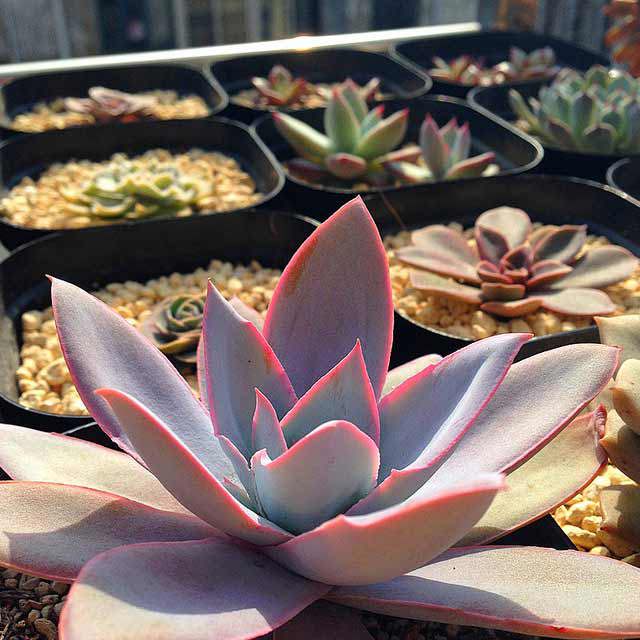
Echeveria cante Drooping Leaves
eco Drooping Leaves

Echeveria cante – Drooping Leaves

Why does your Echeveria cante have drooping leaves? Diagnose the cause and fix it with our step-by-step guide.

pets Pet Friendly

search Possible Causes

error

Overwatering and Root Rot

Excessive moisture in the substrate prevents oxygen from reaching the roots, leading to fungal decay. As the root system fails, the Echeveria can no longer transport water to the leaves, causing them to lose turgidity and droop.

Very Common
lightbulb
How to confirm: Gently tug on a leaf; if it pulls away easily with mushy residue on the stem, rot is likely present.
build How to fix it
shopping_cart Recommended Products
1 Immediately remove the plant from its current pot and inspect the roots for any mushy, black, or foul-smelling decay; trim away all rot using sterilized tools.
2 Repot the Echeveria in a fresh, well-draining substrate specifically designed for succulents, such as a mix containing perlite or pumice to ensure maximum aeration.
3 Use a moisture meter to monitor the substrate and ensure you only water when the soil is completely dry to prevent future overwatering.
error

Dehydration (Underwatering)

Echeveria cante stores water in its fleshy leaves; when soil moisture is depleted for too long, the plant consumes its internal reserves. This results in soft, wrinkled, and drooping foliage as the cells lose pressure.

Very Common
lightbulb
How to confirm: Check the weight of the pot and press a leaf to see if it feels thin, shriveled, or limp.
build How to fix it
shopping_cart Recommended Products
1 Immediately check the soil moisture level using a moisture meter to confirm the depth of dehydration.
2 Thoroughly soak the soil with water until it drains from the bottom of the pot to replenish the plant's internal water reserves.
3 Ensure the plant is in a pot with excellent drainage, such as a Root & Vessel cylinder pot, to prevent future water stagnation or root rot.
warning

Temperature Stress (Heat Shock)

Sudden exposure to high temperatures or direct, intense midday sun can cause the plant's metabolic rate to spike and water to evaporate rapidly. This thermal stress leads to temporary wilting as the plant attempts to protect its core.

Common
lightbulb
How to confirm: Observe if the drooping occurs specifically during the hottest part of the day and recovers at night.
build How to fix it
shopping_cart Recommended Products
1 Move the Echeveria to a cooler, shaded location away from direct midday sun to allow the plant to stabilize its temperature.
2 Check the soil moisture levels using a moisture meter to ensure the plant is not also suffering from dehydration due to rapid evaporation.
3 Provide a light misting or increase local humidity to help the plant recover from the thermal shock.
warning

Nutrient Deficiency (Nitrogen)

A lack of essential macronutrients like nitrogen can impair the structural integrity of cell walls. In succulents, chronic deficiency often manifests as a loss of firmness and a drooping habit.

Common
lightbulb
How to confirm: Check for pale or yellowish discoloration on older leaves in addition to the drooping symptom.
build How to fix it
shopping_cart Recommended Products
1 Apply a balanced, diluted liquid fertilizer to provide immediate nitrogen uptake and restore cell wall strength.
2 Check the soil moisture levels with a meter to ensure the drooping isn't actually caused by overwatering, which is a more common cause for Echeveria.
3 Ensure the plant is receiving bright, indirect sunlight to support nutrient processing and structural growth.

Other Echeveria cante problems

Your plant might also be experiencing one of these issues:

local_hospital All symptoms eco All plants with drooping leaves
favorite