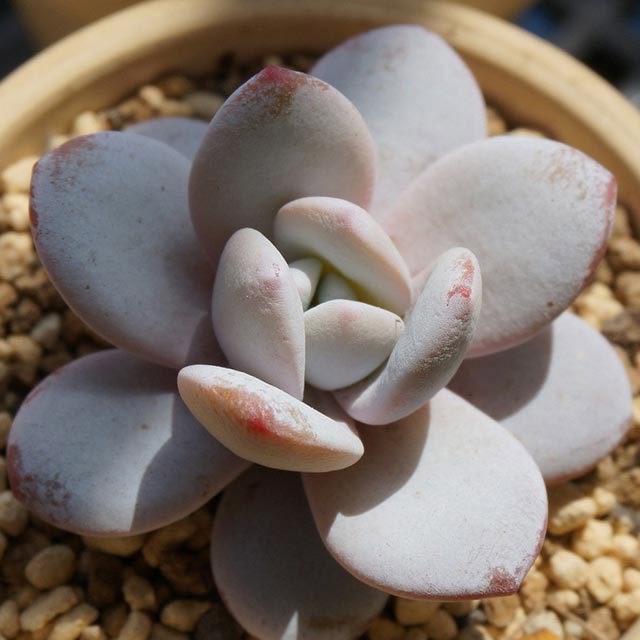
Why does your Echeveria laui have sticky leaves? Diagnose the cause and fix it with our step-by-step guide.
Aphids are small, soft-bodied insects that pierce the leaf tissue of Echeveria laui to suck sap, excreting a sugary substance known as honeydew. This sticky residue often attracts ants and can lead to the development of black sooty mold on the plant's farina.
Scale insects attach themselves to the succulent's stem or leaf base and feed on sap, leaving behind sticky honeydew. Over time, these pests can cause the characteristic thick, waxy farina of Echeveria laui to look dirty or clumped.
While Mealybugs are known more for their white cottony appearance, their feeding process results in the secretion of sticky honeydew. In Echeveria laui, they tend to hide deep within the compact rosette where they are difficult to see.
If the plant has suffered mechanical damage or minor insect punctures, it may leak internal sap which dries into a sticky film. This is less common but can occur if the leaf epidermis is breached during handling.
Your plant might also be experiencing one of these issues:

 English
 Italiano
