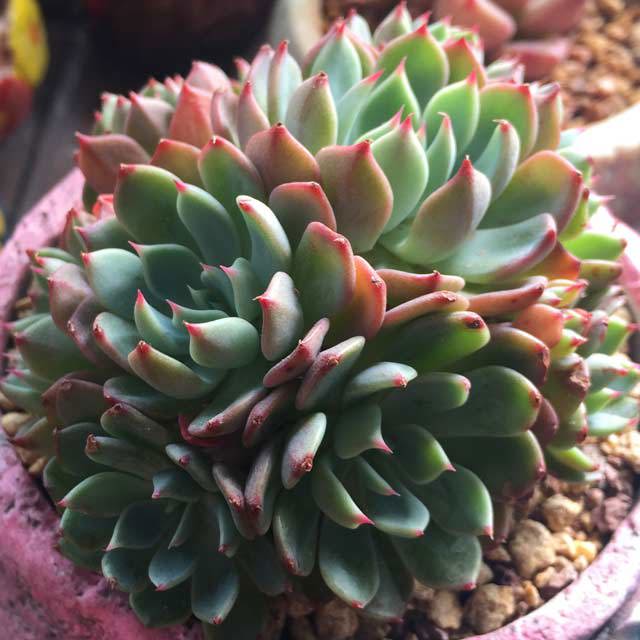
Echeveria Nana Mini Hook Sticky Leaves
eco Sticky Leaves

Echeveria Nana Mini Hook – Sticky Leaves

Why does your Echeveria Nana Mini Hook have sticky leaves? Diagnose the cause and fix it with our step-by-step guide.

search Possible Causes

error

Mealybug Infestation

Mealybugs secrete a sugary substance called honeydew as they feed on the succulent's sap, which creates a sticky film on the leaves. You may also see white, cottony masses in the crevices between the rosette and the stem.

Very Common
lightbulb
How to confirm: Inspect the tight base of the leaf rosette for tiny white, fuzzy insects or egg sacs.
build How to fix it
shopping_cart Recommended Products
1 Isolate the plant immediately and use a cotton swab dipped in isopropyl alcohol to manually remove the white, cottony mealybug masses and the sticky honeydew from the leaf crevices.
2 Apply an organic insecticide spray to the entire plant to eliminate any remaining insects and prevent further infestation.
3 Monitor the soil moisture levels closely, as mealybugs thrive on stressed plants; use a moisture meter to ensure the succulent is not overwatered.
warning

Scale Insects

Scale insects attach themselves to the leaves and stems to suck nutrients, excreting honeydew that results in stickiness. These pests often look like small, motionless bumps on the plant surface.

Common
lightbulb
How to confirm: Check for small, brownish or tan bumps on the leaf edges that can be scraped off with a fingernail.
build How to fix it
shopping_cart Recommended Products
1 Inspect the plant for small, stationary bumps on stems and leaves, and use a cotton swab dipped in alcohol to manually remove visible scale insects.
2 Apply an organic insecticide spray to the entire plant to eliminate remaining insects and larvae.
3 Wipe away the sticky honeydew residue from the leaves to prevent the growth of sooty mold.
warning

Aphid Infestation

Aphids are soft-bodied insects that pierce the tender new growth of Echeveria to feed, leaving behind sticky honeydew. This often coincides with stunted growth or deformed leaves in the center of the rosette.

Common
lightbulb
How to confirm: Look for tiny, green or black insects clustered on the newest, most succulent growth at the plant's center.
build How to fix it
shopping_cart Recommended Products
1 Isolate the plant immediately to prevent the aphids from spreading to other houseplants.
2 Apply an organic insecticide spray to the plant, ensuring you coat the undersides of leaves and the center of the rosette to eliminate aphids and their eggs.
3 Wipe the leaves with a damp cloth to remove the sticky honeydew residue and prevent fungal growth.
info

Excessive Fertilization

Applying too much liquid fertilizer can lead to a buildup of mineral salts on the leaf surfaces, which may feel tacky or sticky when moisture evaporates. This is often accompanied by leaf tip burn.

Rare
lightbulb
How to confirm: Check if you have recently applied fertilizer and look for white crusty salt deposits on the soil surface or leaves.
build How to fix it
shopping_cart Recommended Products
1 Flush the soil thoroughly with room-temperature water to wash away excess mineral salts and prevent further tip burn.
2 Gently wipe the leaves with a damp, soft cloth to remove the sticky residue and allow the plant to breathe.
3 Transition to a much more diluted feeding schedule or pause fertilization entirely until new growth appears healthy.

Other Echeveria Nana Mini Hook problems

Your plant might also be experiencing one of these issues:

local_hospital All symptoms eco All plants with sticky leaves
favorite