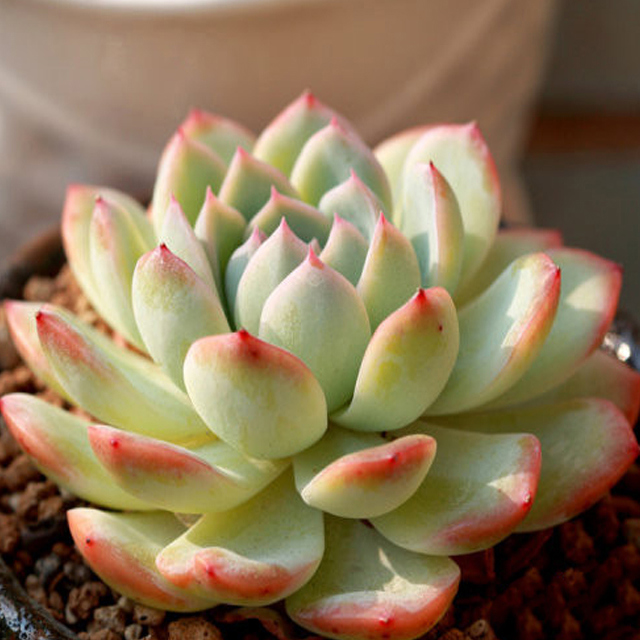
Echeveria sasa Fine Webbing
eco Fine Webbing

Echeveria sasa – Fine Webbing

Why does your Echeveria sasa have fine webbing? Diagnose the cause and fix it with our step-by-step guide.

search Possible Causes

error

Two-Spotted Spider Mite Infestation

The fine webbing is a classic sign of spider mites, which thrive in the warm, dry conditions often experienced by Echeveria sasa. These microscopic pests pierce the succulent's cells to suck out nutrients, leading to stippling and eventual leaf drop.

Very Common
lightbulb
How to confirm: Hold a white piece of paper under a leaf and tap the leaf sharply to see if tiny crawling specks fall onto the paper.
build How to fix it
shopping_cart Recommended Products
1 Apply an organic miticide to eliminate the spider mite population and destroy any remaining eggs or larvae.
2 Increase humidity around the plant and avoid dry, warm air to make the environment less hospitable for future mite outbreaks.
3 Carefully wipe the leaves with a damp cloth to physically remove webbing and any visible pests from the plant surface.
warning

Edema (Physiological Disorder)

While less likely to produce actual silk, extreme fluctuations in humidity can cause cells to burst, sometimes leaving behind a fine, crusty residue or mineral buildup that mimics webbing. This occurs when the Echeveria sasa absorbs water faster than it can transpire through its leaves.

Common
lightbulb
How to confirm: Check if there are small, darkened, corky scars on the leaf edges where the 'webbing' appears to originate.
build How to fix it
shopping_cart Recommended Products
1 Stabilize the environment by maintaining consistent humidity and avoiding rapid watering cycles to prevent cell bursting.
2 Use a moisture meter to ensure the soil is not staying overly saturated, which can trigger water uptake faster than transpiration.
3 Gently wipe the leaves with a soft cloth to remove the mineral residue or crusty buildup mimicking webbing.
warning

Chela/Mite Dust Accumulation

In very dry environments, fine dust particles can cling to the trichomes or natural texture of the Echeveria sasa leaves, creating a web-like appearance. This is often mistaken for pest webbing but lacks the structural silk strands found in mite infestations.

Common
lightbulb
How to confirm: Wipe a leaf with a damp cotton swab to see if the 'webbing' disappears completely without leaving behind any tiny insects.
build How to fix it
shopping_cart Recommended Products
1 Gently wipe the leaves with a soft, damp cloth or use a gentle stream of water to remove dust particles and prevent them from accumulating into web-like structures.
2 Monitor the plant closely for actual silk strands or moving specks to ensure the issue is not a spider mite infestation.
3 Use a soil moisture meter to ensure the environment remains appropriately hydrated, as dry conditions promote dust buildup.

Other Echeveria sasa problems

Your plant might also be experiencing one of these issues:

local_hospital All symptoms eco All plants with fine webbing
favorite


