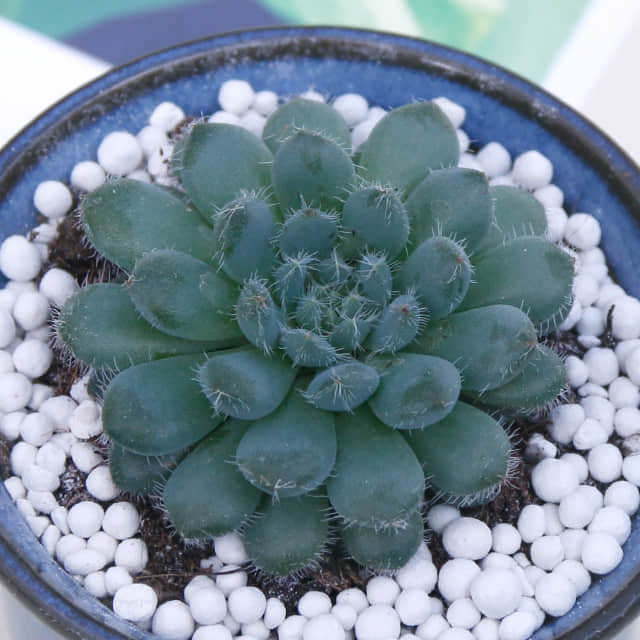
Why does your Echeveria setosa deminuta have white powder? Diagnose the cause and fix it with our step-by-step guide.
This fungal pathogen thrives in high humidity and poor airflow, creating a visible white coating on the leaves of Echeveria. It can eventually lead to leaf necrosis if the stomata are blocked by the mycelium.
These small insects secrete a white, waxy, cotton-like substance to protect themselves. In Echeveria setosa deminuta, they often hide in the tight crevices between the leaf bases and the rosette center.
When hard water evaporates from the leaf surface of this succulent, it leaves behind white calcium or magnesium scales. This is not a biological pathogen but a physical residue from irrigation.
Salts and minerals from the potting medium can migrate to the surface of the plant or leaves during drying cycles. This is common in succulents grown in gritty, mineral-heavy cactus mixes.
Your plant might also be experiencing one of these issues:

 English
 Italiano