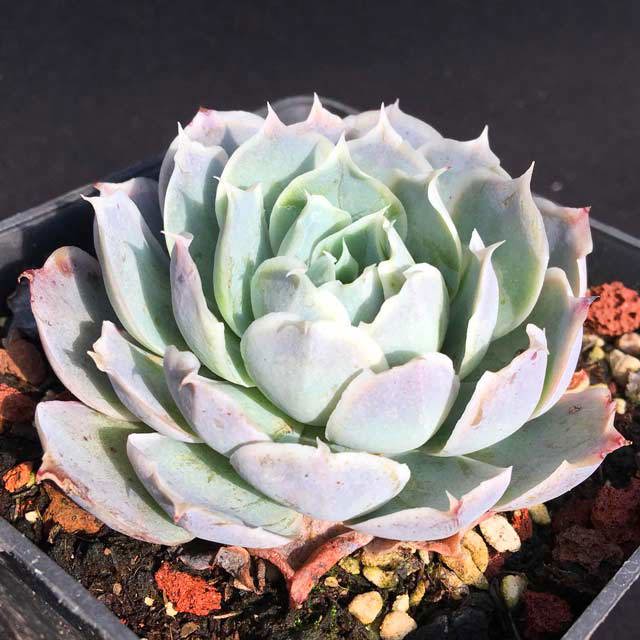
Echeveria simulans Ascension Fine Webbing
eco Fine Webbing

Echeveria simulans Ascension – Fine Webbing

Why does your Echeveria simulans Ascension have fine webbing? Diagnose the cause and fix it with our step-by-step guide.

pets Pet Friendly

search Possible Causes

error

Two-Spotted Spider Mite Infestation

Spider mites thrive in the warm, dry conditions often preferred by Echeveria. They pierce individual cells of the succulent leaves to feed on sap, leaving behind fine silk webbing as they build colonies.

Very Common
lightbulb
How to confirm: Hold a white piece of paper under a leaf and tap it sharply to see if tiny crawling dots or dust-like specks fall onto the paper.
build How to fix it
shopping_cart Recommended Products
1 Isolate the plant immediately to prevent the mites from spreading to other succulents and spray the foliage thoroughly with an organic miticide.
2 Increase humidity and reduce heat around the plant, as spider mites thrive in dry environments; you can use a fine mist spray to keep the air moist.
3 Gently wipe the leaves with a damp cloth to physically remove webbing and any remaining mite colonies.
warning

Tetranychus urticae (European Red Spider Mite) Overpopulation

In many indoor Echeveria environments, high humidity combined with low air circulation can trigger a population explosion of these mites, resulting in denser webbing around the leaf rosette base.

Common
lightbulb
How to confirm: Inspect the underside of the leaves for tiny yellow stippling or pale spots that precede the appearance of heavy webbing.
build How to fix it
shopping_cart Recommended Products
1 Apply an organic miticide/insecticide spray to the plant, ensuring you coat the undersides of leaves and the leaf rosette base to eliminate existing mites and eggs.
2 Increase air circulation around the plant using a small fan to disrupt the humid microclimate that allows spider mite populations to thrive.
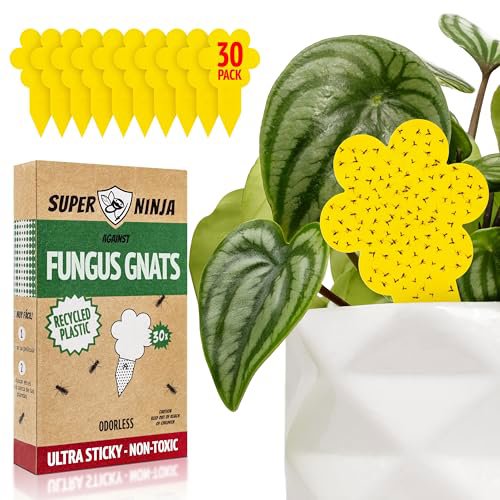
3 Use yellow sticky traps near the plant to capture adult mites and monitor for any new infestations.
warning

Extreme Low Humidity and Dust Accumulation

While not a biological pathogen, extremely dry air can cause fine dust to cling to the plant's epicuticular wax, which may superficially resemble very thin, disorganized silk strands.

Common
lightbulb
How to confirm: Wipe a leaf with a damp cloth; if the 'webbing' disappears and leaves no residue on your finger, it is likely just dust or mineral buildup.
build How to fix it
shopping_cart Recommended Products
1 Gently clean the leaves using a soft, damp cloth or a fine mist to remove dust accumulation and prevent it from clinging to the plant's wax.
2 Increase local humidity around the Echeveria by using a pebble tray or a nearby humidifier to prevent the air from becoming too dry.

Other Echeveria simulans Ascension problems

Your plant might also be experiencing one of these issues:

local_hospital All symptoms eco All plants with fine webbing
favorite