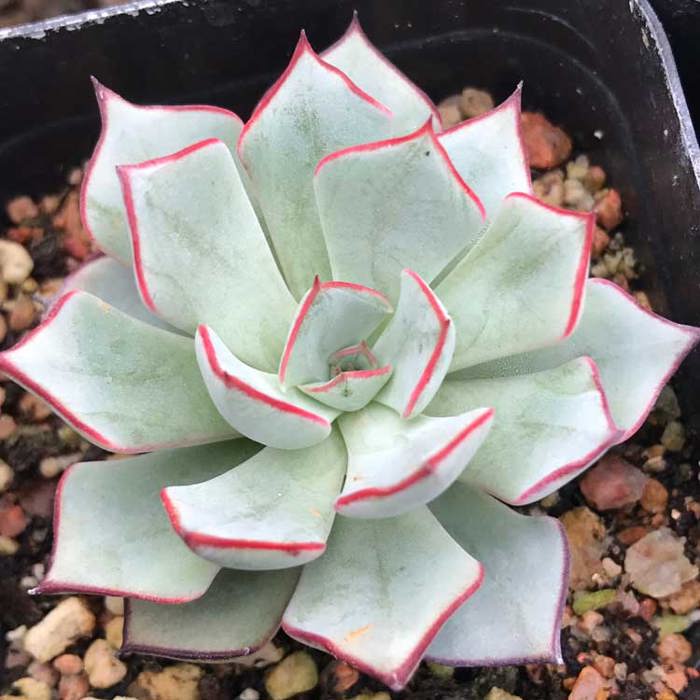
Echeveria strictiflora nova Fine Webbing
eco Fine Webbing

Echeveria strictiflora nova – Fine Webbing

Why does your Echeveria strictiflora nova have fine webbing? Diagnose the cause and fix it with our step-by-step guide.

pets Pet Friendly

search Possible Causes

error

Two-Spotted Spider Mite Infestation

Spider mites thrive in the warm, dry conditions typical for Echeveria, creating fine silk webbing to protect their colonies. These pests pierce the succulent leaves to suck out chlorophyll, leading to stippling and eventual leaf drop.

Very Common
lightbulb
How to confirm: Hold a white piece of paper under a leaf and tap it sharply to see if tiny moving specks fall onto the paper.
build How to fix it
shopping_cart Recommended Products
1 Immediately spray the plant with an organic miticide or insecticide to kill existing spider mites and their eggs.
2 Isolate the Echeveria from other houseplants to prevent the mites from spreading via the fine webbing.
3 Increase humidity and reduce dry heat by misting the plant or using a pebble tray to make the environment less hospitable for mites.
warning

Thrips Infestation

While thrips are more known for silvery scarring, heavy infestations in high-density succulent collections can sometimes create a fine, messy appearance of debris and silk-like excretion. They feed on the tender new growth at the center (meristem) of the Echeveria.

Common
lightbulb
How to confirm: Inspect the very center of the rosette for tiny, slender, dark-colored insects moving between leaf bases.
build How to fix it
shopping_cart Recommended Products
1 Isolate the affected Echeveria immediately from your other plants to prevent the thrips from spreading through your collection.
2 Apply an organic insecticide spray to the plant, ensuring you coat the tender new growth at the center where thrips feed.
3 Use yellow sticky traps near the plant to capture adult thrips and monitor the effectiveness of the treatment.
warning

Edema (Cell Rupture)

While less common as a source of 'webbing,' extreme fluctuations in moisture can cause cells to burst, sometimes leaving behind fine, dried residue or crusty patterns that may be mistaken for silk. This occurs when the Echeveria's roots take up water faster than the leaves can transpire.

Common
lightbulb
How to confirm: Check if the leaves appear slightly translucent or have small, corky bumps alongside the dry patches.
build How to fix it
shopping_cart Recommended Products
1 Inspect the undersides of leaves and crevices for tiny moving organisms to confirm if the 'webbing' is actually Spider Mites, as they are the primary cause of fine silk in succulents.
2 Stabilize the watering schedule to prevent rapid moisture uptake by ensuring the soil dries out completely between waterings, reducing the physiological stress that causes cell rupture.
3 Ensure the plant is in a well-draining medium with high aeration to prevent waterlogged roots from over-absorbing moisture during high humidity.

Other Echeveria strictiflora nova problems

Your plant might also be experiencing one of these issues:

local_hospital All symptoms eco All plants with fine webbing
favorite