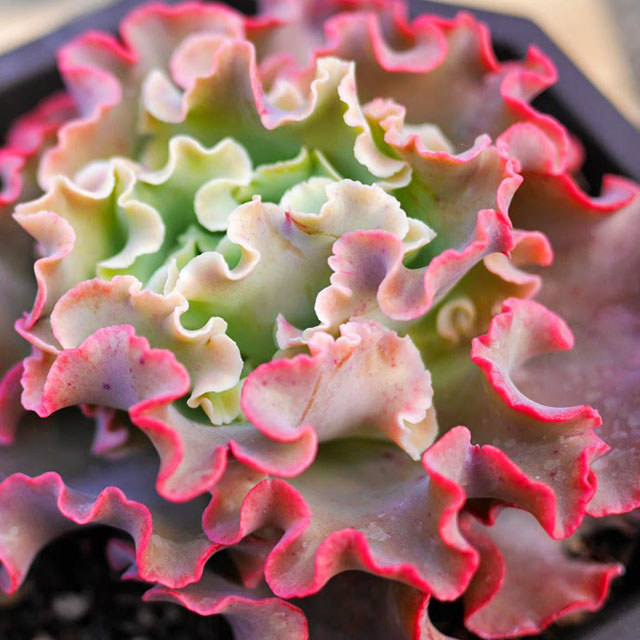
Echeveria Takasago no Okina Yellow Leaves
eco Yellow Leaves

Echeveria Takasago no Okina – Yellow Leaves

Why does your Echeveria Takasago no Okina have yellow leaves? Diagnose the cause and fix it with our step-by-step guide.

pets Pet Friendly

search Possible Causes

error

Overwatering and Root Rot

Echeveria Takasago no Okina is a succulent that stores water in its leaves; excessive moisture prevents the roots from respiring, leading to cellular breakdown and yellowing. As roots rot, they can no longer transport nutrients or water, causing the foliage to turn translucent yellow.

Very Common
lightbulb
How to confirm: Gently squeeze a lower leaf to see if it feels mushy or turns liquid, and check if the stem base is dark and soft.
build How to fix it
shopping_cart Recommended Products
1 Immediately remove the plant from its current pot and trim away any mushy, black, or slimy roots using sterilized shears.
2 Repot the Echeveria in a fresh, well-draining succulent mix and use a container with excellent drainage, such as a Root & Vessel cylinder pot.
3 Amend the new soil with perlite to increase aeration and prevent future rot, and use a moisture meter to ensure the soil dries out completely between waterings.
warning

Nutrient Deficiency (Nitrogen)

A lack of nitrogen prevents the plant from producing chlorophyll, which is essential for the green pigment in its rosette. This typically manifests as a pale or uniform yellowing starting with the older, outer leaves.

Common
lightbulb
How to confirm: Check if the yellowing is progressing from the oldest leaves toward the center and if you have used fertilizer recently.
build How to fix it
shopping_cart Recommended Products
1 Apply a nitrogen-rich liquid fertilizer to boost chlorophyll production and restore the plant's green pigment.
2 Check the soil moisture levels using a moisture meter to ensure the nitrogen is being absorbed and not being washed away by overwatering.
3 Ensure the Echeveria is receiving bright, indirect sunlight to support the metabolic processes required for nutrient uptake.
warning

Insufficient Light Exposure

While Echeverias need bright light, extreme lack of sunlight can cause the plant to lose its compact form and chlorophyll density. This stress can lead to chlorosis (yellowing) as the plant fails to photosynthesize efficiently.

Common
lightbulb
How to confirm: Observe if the rosette is 'stretching' or becoming elongated (etiolation) alongside the yellowing.
build How to fix it
shopping_cart Recommended Products
1 Move your Echeveria to a location that receives much brighter, indirect sunlight or several hours of direct morning sun to restore chlorophyll production.
2 Supplement with a full-spectrum grow light to ensure consistent light intensity, especially if natural light is insufficient.
3 Monitor the soil moisture closely with a meter to ensure the plant isn't also suffering from overwatering, which can exacerbate yellowing.
warning

Temperature Stress (Cold Damage)

Echeveria Takasago no Okina is sensitive to frost; exposure to temperatures near freezing can rupture cell walls. This damage causes the leaves to lose their structural integrity and turn a sickly yellow or translucent color.

Common
lightbulb
How to confirm: Check if there was a recent drop in temperature or if the plant was placed near a cold window draft.
build How to fix it
shopping_cart Recommended Products
1 Immediately move the plant to a warmer, frost-free environment to prevent further cell damage and stabilize the temperature.
2 Check the soil moisture levels to ensure the cold exposure hasn't led to waterlogged soil, which can cause rot in stressed succulents.
3 Prune away any leaves that have become completely translucent or mushy to prevent fungal issues from spreading to healthy tissue.

Other Echeveria Takasago no Okina problems

Your plant might also be experiencing one of these issues:

local_hospital All symptoms eco All plants with yellow leaves
favorite