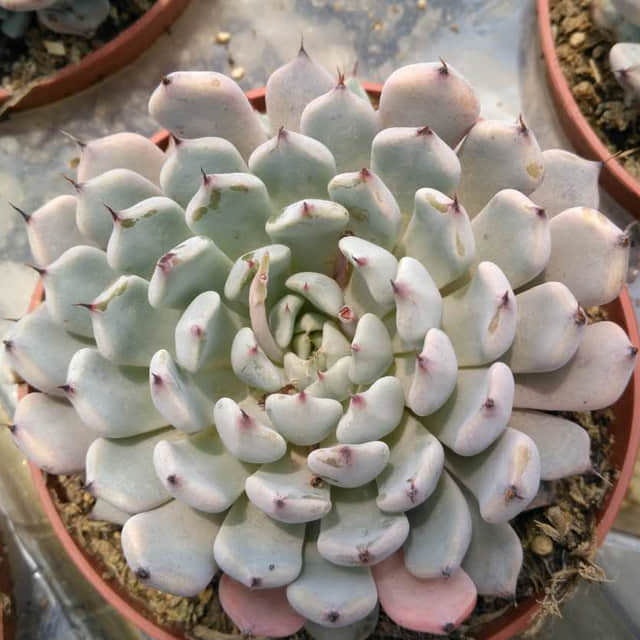
Why does your Echeveria Zaragosa have yellow leaves? Diagnose the cause and fix it with our step-by-step guide.
Excessive moisture in the substrate causes roots to suffocate, leading to a breakdown of cell walls and yellowing leaves that often feel translucent or mushy. Echeveria Zaragosa are succulents that require well-draining soil and periods of complete dryness between waterings.
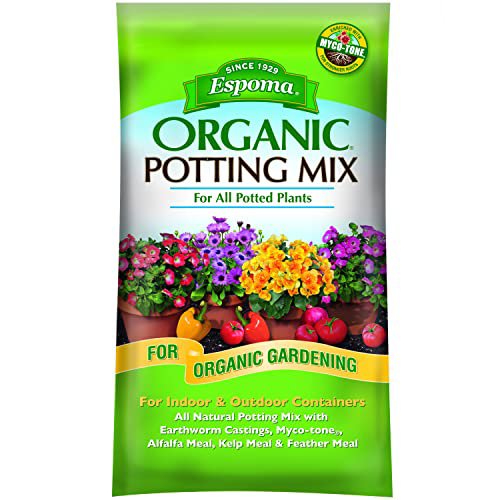
A lack of available nitrogen prevents the plant from producing chlorophyll, causing older leaves to turn pale yellow before progressing toward the center. This often occurs if the succulent has been in the same depleted potting mix for multiple growing seasons.
Echeveria Zaragosa requires bright, direct light to maintain its compact rosette and pigment; insufficient light can lead to chlorosis and etiolation (stretching). Low light levels reduce the plant's ability to photosynthesize efficiently.
Exposure to sudden cold drafts or temperatures below 50°F (10°C) can cause physiological stress, resulting in yellowing or even dark spotting. This species is not frost-tolerant and requires stable, warm environments.
Your plant might also be experiencing one of these issues:

 English
 Italiano