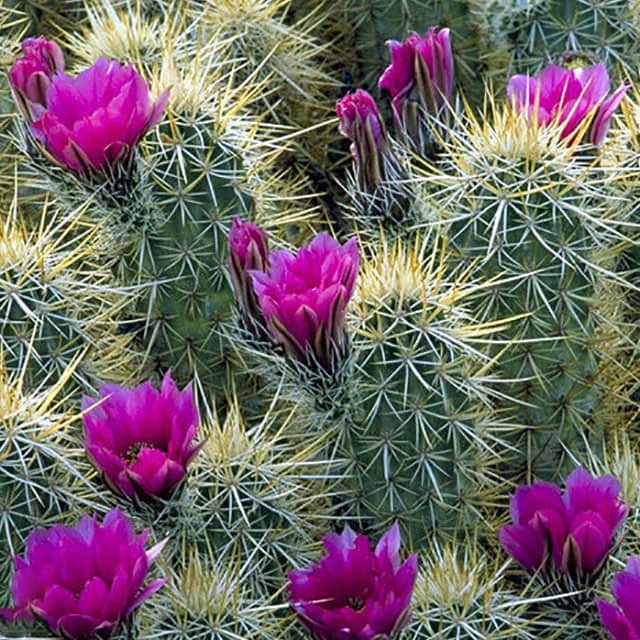
Echinocereus engelmannii White Cottony Spots
eco White Cottony Spots

Echinocereus engelmannii – White Cottony Spots

Why does your Echinocereus engelmannii have white cottony spots? Diagnose the cause and fix it with our step-by-step guide.

search Possible Causes

error

Cottony Mealybugs

These small insects secrete a white, waxy filament to protect themselves, which looks like tufts of cotton nestled in the areoles or near the base of the cactus. They suck the sap from the Engelmann's Hedgehog Cactus, potentially causing localized tissue collapse.

Very Common
lightbulb
How to confirm: Use a cotton swab dipped in isopropyl alcohol to dab the white spots; if they dissolve and turn brown, it is likely mealybugs.
build How to fix it
shopping_cart Recommended Products
1 Isolate the cactus from other plants and manually remove visible mealybugs using a cotton swab dipped in isopropyl alcohol.
2 Apply an organic insecticide spray to the entire plant, ensuring you reach the crevices and base where pests hide.
3 Monitor the plant closely with a moisture meter to ensure the soil remains dry, as overly moist conditions can encourage pest and fungal issues.
warning

Scale Insects

While scale often appears as hard bumps, certain species can produce a fuzzy or cottony appearance during their mobile stages. They attach to the cactus epidermis and drain nutrients, leading to stunted growth in the stem.

Common
lightbulb
How to confirm: Inspect the base of the spines for small, brownish-white bumps that do not move when poked with a needle.
build How to fix it
shopping_cart Recommended Products
1 Treat the cactus with an organic insecticide spray to eliminate the scale insects and their mobile stages.
2 Manually remove visible cottony clusters using a cotton swab dipped in isopropyl alcohol to prevent further nutrient drainage.
3 Monitor soil moisture levels with a meter to ensure the cactus is not being overwatered, as excess moisture can exacerbate pest issues.
warning

Fungal Mycelium (Rot related)

If the white spots are accompanied by soft, mushy tissue, it may be fungal mycelium emerging from an area of rot. This often occurs in Echinocereus when the substrate retains too much moisture, leading to anaerobic conditions.

Common
lightbulb
How to confirm: Press the area with your finger to see if the cactus flesh feels soft or hollow compared to the rest of the plant.
build How to fix it
shopping_cart Recommended Products
1 Immediately remove any mushy or rotting tissue using sterilized tools and discard the affected parts to prevent the spread of fungus.
2 Repot the cactus in a highly porous, well-draining substrate to eliminate anaerobic conditions and prevent further rot.
3 Apply a fungicide to the affected area and monitor soil moisture closely using a moisture meter to ensure the substrate is not overwatered.
local_hospital All symptoms eco All plants with white cottony spots
favorite