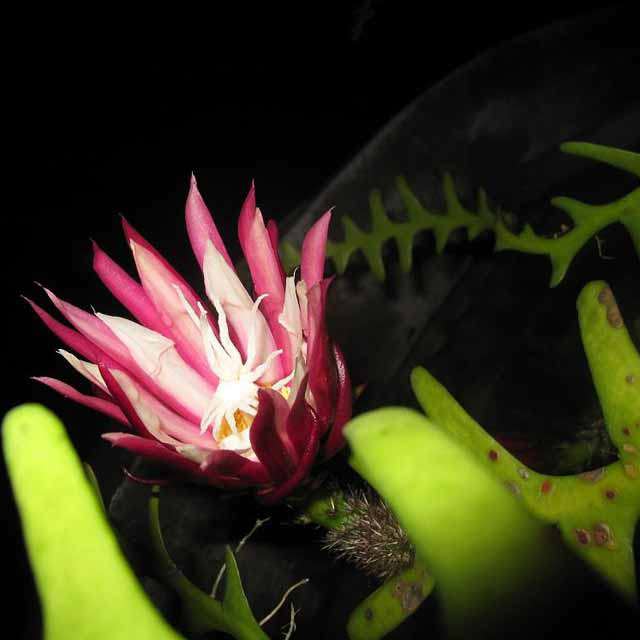
Epiphyllum anguliger White Cottony Spots
eco White Cottony Spots

Epiphyllum anguliger – White Cottony Spots

Why does your Epiphyllum anguliger have white cottony spots? Diagnose the cause and fix it with our step-by-step guide.

pets Pet Friendly

search Possible Causes

error

Mealybug Infestation

The white cottony masses are classic signs of mealybugs, which secrete a waxy substance to protect themselves. These pests suck the sap from the nodes and crevices of the fishbone cactus, often causing stems to weaken or discolor.

Very Common
lightbulb
How to confirm: Use a cotton swab dipped in isopropyl alcohol to touch the spots; if they dissolve and turn brown, it is likely mealybugs.
build How to fix it
shopping_cart Recommended Products
1 Isolate the plant immediately from other greenery and use a cotton swab dipped in isopropyl alcohol to manually remove the visible white cottony masses from the cactus nodes.
2 Apply an organic insecticide spray to the entire plant, ensuring you coat the crevices and undersides of the stems to eliminate any remaining pests and larvae.
3 Monitor the plant closely for new infestations and use yellow sticky traps to capture any flying adult pests that may be present in the area.
warning

Cottony Scale

Certain types of scale insects produce white, fluffy filaments that can mimic cotton. These pests attach themselves to the flat segments of the Epiphyllum anguliger and can lead to stunted growth and yellowing.

Common
lightbulb
How to confirm: Check if there are small, brownish bumps underneath the white fluff on the cactus segments.
build How to fix it
shopping_cart Recommended Products
1 Isolate the plant immediately to prevent the spread of scale insects to other houseplants.
2 Treat the affected segments by spraying the plant with an organic insecticide/miticide to eliminate the cottony scale insects.
3 Gently wipe away any visible white fluffy filaments and dead insects using a cotton swab dipped in isopropyl alcohol.
warning

Powdery Mildew

While more common in leafy plants, certain fungal pathogens can manifest as a white, dusty coating on the surface of the cactus. This usually occurs in environments with high humidity and poor air circulation.

Common
lightbulb
How to confirm: Observe if the white spots look like a fine dust that can be wiped off easily without leaving fleshy residue.
build How to fix it
shopping_cart Recommended Products
1 Apply an organic fungicide to the affected areas to eliminate the powdery mildew spores and prevent further spread.
2 Improve air circulation around the cactus and reduce humidity levels to create an environment less hospitable to fungal growth.
3 Gently wipe the white spots off the cactus stems with a soft cloth to remove visible fungal colonies.
local_hospital All symptoms eco All plants with white cottony spots
favorite