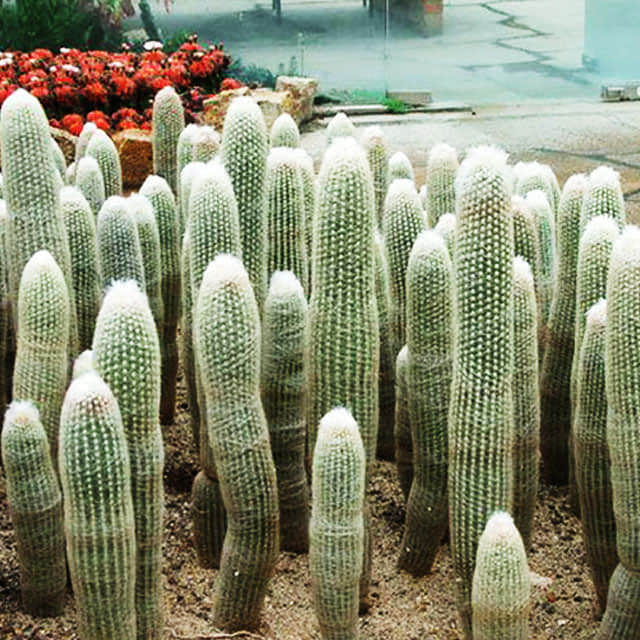
Espostoa melanostele White Cottony Spots
eco White Cottony Spots

Espostoa melanostele – White Cottony Spots

Why does your Espostoa melanostele have white cottony spots? Diagnose the cause and fix it with our step-by-step guide.

search Possible Causes

error

Mealybugs

These small, soft-bodied insects secrete a white, waxy, cotton-like substance to protect themselves. In Espostoa species, they often hide deep within the dense, hair-like spines (trichomes), making them difficult to spot initially.

Very Common
lightbulb
How to confirm: Use a cotton swab dipped in rubbing alcohol to dab the white spots; if the substance dissolves and reveals tiny insects, it is mealybug infestation.
build How to fix it
shopping_cart Recommended Products
1 Isolate the cactus immediately to prevent the mealybugs from spreading to other plants in your collection.
2 Carefully treat the visible cottony spots using an organic insecticide spray to eliminate the insects and their protective waxy coating.
3 Use a cotton swab dipped in isopropyl alcohol to manually remove any remaining pests hidden deep within the cactus's hair-like spines.
warning

Cottony Scale

Certain types of scale insects produce a fluffy, white appearance similar to mealybugs. They attach themselves to the stem and suck the sap from the cactus, which can lead to localized swelling or discoloration.

Common
lightbulb
How to confirm: Gently scrape a spot with your fingernail; if you find a hard, shell-like body underneath the fluff, it is scale rather than mealybugs.
build How to fix it
shopping_cart Recommended Products
1 Treat the affected areas with an organic insecticide spray to eliminate the scale insects and prevent further sap extraction.
2 Manually remove visible white cottony clusters using a cotton swab dipped in isopropyl alcohol to stop the spread.
3 Isolate the cactus from other houseplants to prevent the scale insects from migrating to healthy plants.
warning

Fungal Mycelium (Molds)

In high humidity or poorly ventilated environments, certain fungi can grow on the surface of the cactus. This growth often appears as white, fuzzy patches that may follow lines of moisture or decaying tissue.

Common
lightbulb
How to confirm: Check if the white spots are accompanied by soft, mushy areas on the cactus stem, which would indicate fungal rot rather than an insect pest.
build How to fix it
shopping_cart Recommended Products
1 Gently remove the white fuzzy patches using a soft brush or cotton swab dipped in isopropyl alcohol to prevent the fungus from spreading.
2 Apply an organic fungicide to the affected areas to eliminate remaining fungal spores and protect the cactus tissue.
3 Improve air circulation around the cactus and reduce humidity levels to prevent future mold growth.

Other Espostoa melanostele problems

Your plant might also be experiencing one of these issues:

local_hospital All symptoms eco All plants with white cottony spots
favorite

