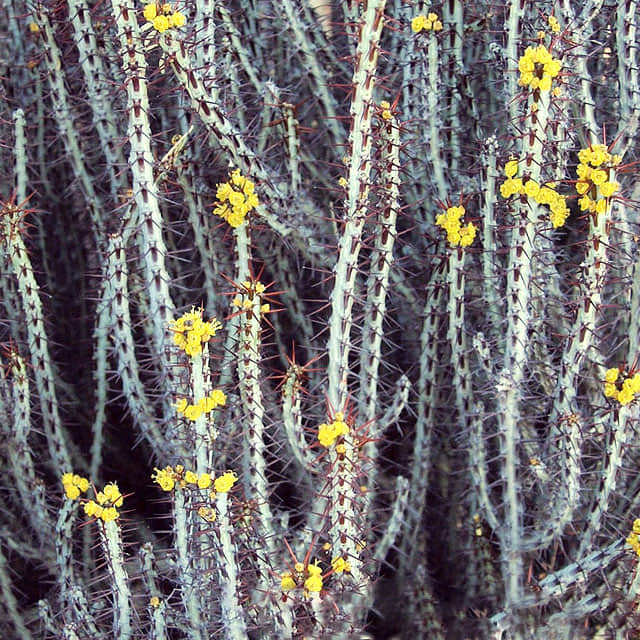
Euphorbia aeruginosa White Cottony Spots
eco White Cottony Spots

Euphorbia aeruginosa – White Cottony Spots

Why does your Euphorbia aeruginosa have white cottony spots? Diagnose the cause and fix it with our step-by-step guide.

search Possible Causes

error

Mealybugs

These sap-sucking insects secrete a white, waxy, cottony substance to protect themselves while feeding on the succulent tissues of Euphorbia aeruginosa. Their presence often leads to leaf yellowing and stunted growth due to nutrient depletion.

Very Common
lightbulb
How to confirm: Use a soft brush or cotton swab dipped in alcohol to see if the white spots dissolve or move away from the plant stem.
build How to fix it
shopping_cart Recommended Products
1 Isolate the plant immediately to prevent the mealybugs from spreading to your other houseplants.
2 Treat the infestation by spraying the plant with an organic insecticide/miticide to eliminate the insects and their waxy coating.
3 Gently wipe away visible cottony clusters using a cotton swab dipped in isopropyl alcohol to kill the pests on contact.
warning

Powdery Mildew

This fungal pathogen manifests as a white, flour-like coating on the surface of leaves and stems. In succulents like Blue-green spurge, it typically thrives in environments with high humidity and poor air circulation.

Common
lightbulb
How to confirm: Check if the white spots can be rubbed off easily with your finger and if the underlying leaf tissue looks scorched or discolored.
build How to fix it
shopping_cart Recommended Products
1 Apply an organic fungicide to eliminate the existing fungal spores on the leaves and stems.
2 Improve air circulation around the plant and reduce humidity to prevent the fungus from spreading.
3 Prune and dispose of any heavily infected leaves to prevent the pathogen from colonizing healthy tissue.
warning

Cottony Blight (Sclerotinia)

While less common in succulents, certain fungal pathogens can produce white mycelial growth that resembles cotton. This often affects the stem base of Euphorbia species if the substrate remains excessively damp.

Common
lightbulb
How to confirm: Inspect the base of the plant for any signs of softening or dark, sunken lesions accompanied by the white fuzz.
build How to fix it
shopping_cart Recommended Products
1 Remove any heavily infected stems or plant parts and dispose of them immediately to prevent the fungus from spreading to healthy tissue.
2 Apply an organic fungicide to the affected area to control the fungal growth and protect the rest of the plant.
3 Adjust your watering routine to ensure the substrate is not excessively damp, and use a moisture meter to monitor soil levels and prevent future rot.
local_hospital All symptoms eco All plants with white cottony spots
favorite