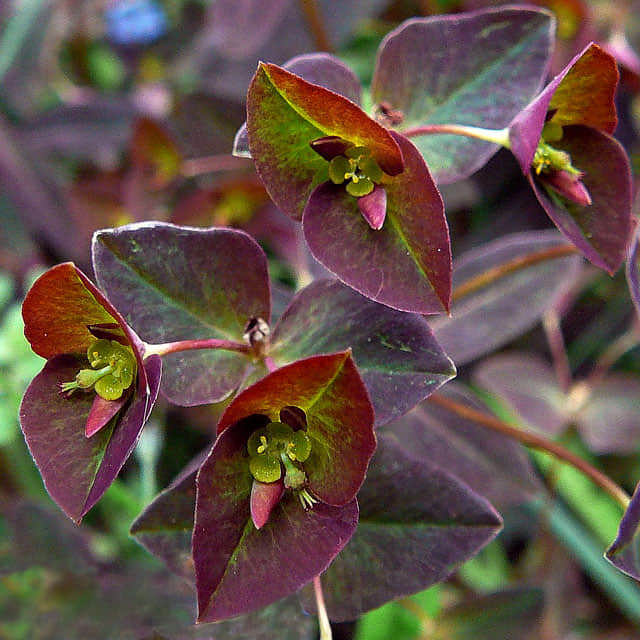
Euphorbia dulcis Chameleon Sticky Leaves
eco Sticky Leaves

Euphorbia dulcis Chameleon – Sticky Leaves

Why does your Euphorbia dulcis Chameleon have sticky leaves? Diagnose the cause and fix it with our step-by-step guide.

search Possible Causes

error

Aphid Infestation

Aphids feed on the succulent stems and leaves of Euphorbia, excreting a sugary substance known as honeydew which creates the sticky residue. This is common in indoor succulents where airflow is low.

Very Common
lightbulb
How to confirm: Inspect the undersides of the leaves and new growth for tiny, soft-bodied insects or small clusters of eggs.
build How to fix it
shopping_cart Recommended Products
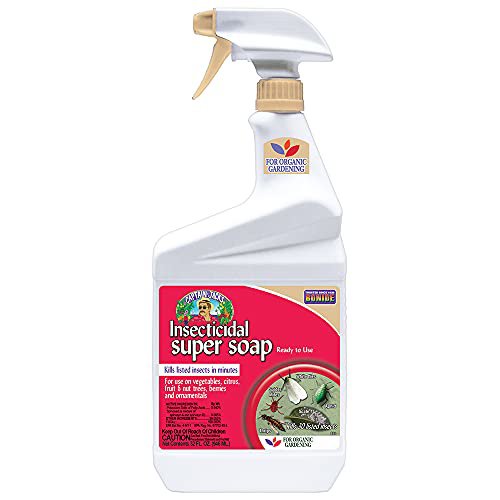
1 Apply an organic insecticide to eliminate the aphid population and stop the production of honeydew.
2 Wipe the sticky residue off the leaves with a damp cloth to prevent fungal growth and allow the plant to breathe.
3 Improve air circulation around the plant by moving it to a well-ventilated area to prevent future infestations.
error

Scale Insects

Scale insects attach themselves to the plant and suck sap, producing honeydew as a byproduct. Their presence often results in a sticky film on the foliage and can lead to sooty mold growth.

Very Common
lightbulb
How to confirm: Look for small, hard, bump-like protrusions firmly attached to the stems or leaf surfaces that do not move when disturbed.
build How to fix it
shopping_cart Recommended Products
1 Apply an organic insecticide spray to the foliage to kill existing scale insects and their eggs.
2 Wipe the leaves with a damp cloth to remove the sticky honeydew residue and prevent sooty mold growth.
3 Inspect the undersides of leaves and stems for small, scale-like bumps and treat any new sightings immediately.
warning

Mealybug Infestation

Mealybugs produce honeydew while feeding on the plant's juices, causing stickiness. They are often accompanied by white, cottony masses in the crevices of the Euphorbia stems.

Common
lightbulb
How to confirm: Search for small, white, fluffy patches tucked into the leaf axils or near the base of the plant.
build How to fix it
shopping_cart Recommended Products
1 Identify and remove visible white, cottony mealybug masses from stem crevices using a cotton swab dipped in isopropyl alcohol.
2 Apply an organic insecticide spray to the entire plant to eliminate remaining pests and prevent further feeding.
3 Wipe the sticky leaves with a damp cloth to remove the honeydew residue and prevent fungal growth.
warning

Excessive Fertilizer Residue

Over-application of liquid fertilizers can leave concentrated mineral and sugar residues on the leaves, which may feel tacky or sticky as the water evaporates.

Common
lightbulb
How to confirm: Check if the stickiness is uniform across all leaves and if you have recently applied a high-nitrogen liquid fertilizer.
build How to fix it
shopping_cart Recommended Products
1 Gently wipe the leaves with a soft, damp cloth to remove the concentrated fertilizer residue and prevent leaf burn.
2 Flush the soil with plenty of fresh water to leach out excess mineral salts and prevent further buildup.
3 Monitor soil moisture levels closely to ensure you are not overwatering, which can exacerbate nutrient accumulation.
local_hospital All symptoms eco All plants with sticky leaves
favorite