Euphorbia horrida Sudden Leaf Drop
eco Sudden Leaf Drop

Euphorbia horrida – Sudden Leaf Drop

Why does your Euphorbia horrida have sudden leaf drop? Diagnose the cause and fix it with our step-by-step guide.

search Possible Causes

error

Overwatering and Root Rot

Euphorbia horrida is a succulent that requires extremely well-draining soil; excessive moisture leads to fungal pathogens like Phytophthora attacking the root system. As roots decay, they can no longer support the plant's water needs, causing it to shed leaves as a stress response.

Very Common
lightbulb
How to confirm: Check if the base of the stem feels soft or mushy and if the substrate remains damp for several days after watering.
build How to fix it
shopping_cart Recommended Products
1 Immediately remove the plant from its current pot and inspect the roots for mushy, dark, or foul-smelling decay; trim away any rotten sections using sterilized tools.
2 Repot the Euphorbia in a highly porous, well-draining substrate by mixing a gritty medium like perlite or pumice with your potting soil to prevent future water retention.
3 Switch to a container with excellent drainage and use a moisture meter to ensure the soil is completely dry before watering again.
error

Temperature Stress (Cold Shock)

This species is native to arid regions and is highly sensitive to temperatures below 10°C (50°F). Sudden drops in temperature cause cellular damage, leading to rapid leaf abscission to conserve energy.

Very Common
lightbulb
How to confirm: Review recent weather changes or check if the plant was exposed to a drafty window or nighttime frost.
build How to fix it
shopping_cart Recommended Products
1 Immediately move the plant to a warm, draft-free location where temperatures remain consistently above 15°C (60°F) to prevent further cellular damage.
2 Monitor the soil moisture closely using a moisture meter to ensure the plant is not overwatered while in a stressed, non-photosynthesizing state.
3 Avoid applying any fertilizers or heavy nutrients until you see new growth, as feeding a stressed plant can cause further harm.
warning

Nutrient Deficiency (Nitrogen)

A lack of essential macronutrients, particularly nitrogen, prevents the maintenance of chlorophyll and foliage. In succulents like Euphorbia, this often manifests as yellowing followed by a sudden drop of older leaves.

Common
lightbulb
How to confirm: Observe if the leaves are turning pale yellow before dropping and check when the last fertilization occurred.
build How to fix it
shopping_cart Recommended Products
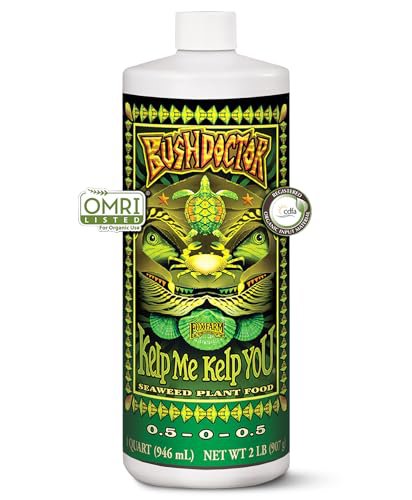
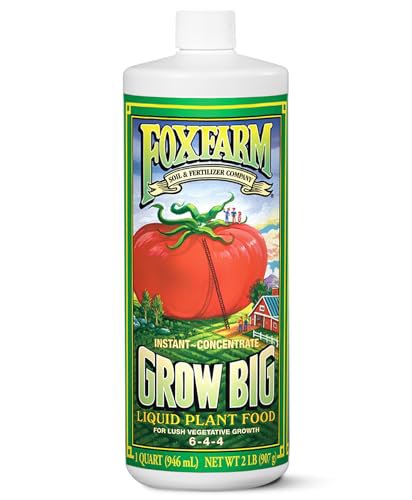
1 Apply a nitrogen-rich organic fertilizer to boost chlorophyll production and foliage maintenance.
2 Check soil moisture levels with a meter to ensure the nitrogen deficiency isn't being exacerbated by overwatering, which can cause root rot and leaf drop.
3 Amend the existing potting medium with a nitrogen-rich organic amendment like blood meal to provide long-term nutrient release.
warning

Pest Infestation (Scale or Mealybugs)

Sap-sucking insects penetrate the epidermis to feed on the plant's fluids, weakening the overall vigor. This loss of moisture and nutrients can trigger a survival mechanism where the plant sheds leaves to reduce transpiration.

Common
lightbulb
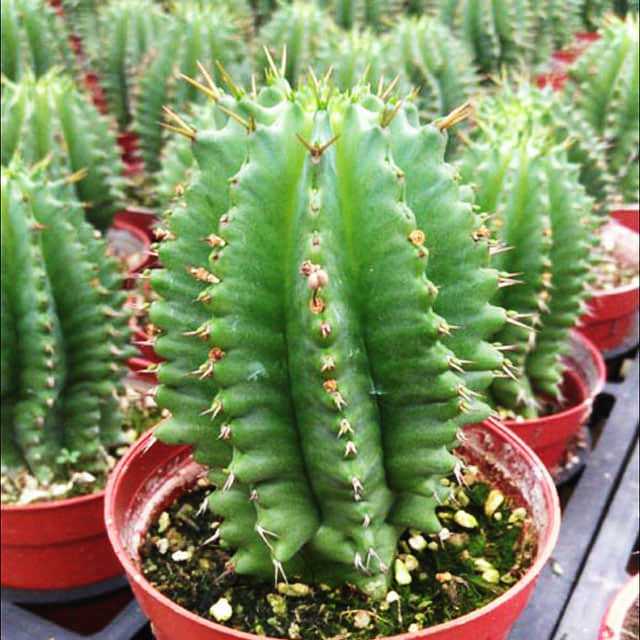
How to confirm: Inspect the crevices between the spines and along the stem for small, white cottony spots or hard brown bumps.
build How to fix it
shopping_cart Recommended Products
1 Inspect the plant closely for white, cottony clusters (mealybugs) or small, brown bumps (scale) on the stems and crevices.
2 Apply an organic insecticide spray to the entire plant, ensuring you coat the crevices where pests hide, to eliminate existing insects and larvae.
3 Isolate the Euphorbia from other houseplants to prevent the infestation from spreading to your healthy greenery.

Other Euphorbia horrida problems

Your plant might also be experiencing one of these issues:

local_hospital All symptoms eco All plants with sudden leaf drop
favorite