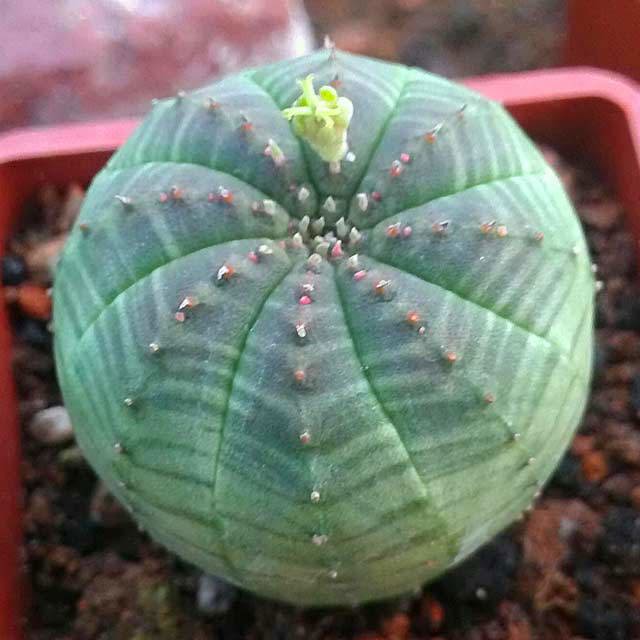
Euphorbia obesa Sudden Leaf Drop
eco Sudden Leaf Drop

Euphorbia obesa – Sudden Leaf Drop

Why does your Euphorbia obesa have sudden leaf drop? Diagnose the cause and fix it with our step-by-step guide.

search Possible Causes

error

Root Rot (Phytophthora or Pythium)

As a succulent, Euphorbia obesa is highly susceptible to fungal pathogens when soil remains damp. Excess moisture causes the root system to decay, leading to a sudden inability for the plant to support its structures, resulting in detachment of leaves/scales.

Very Common
lightbulb
How to confirm: Gently squeeze the base of the stem; if it feels soft or mushy, rot is present.
build How to fix it
shopping_cart Recommended Products
1 Immediately remove the plant from the pot and trim away all mushy, blackened, or decayed roots using sterilized tools.
2 Repot the Euphorbia obesa in a fresh, highly porous substrate designed for succulents to ensure rapid drainage and prevent future moisture retention.
3 Use a moisture meter to monitor the soil, ensuring you only water when the medium is completely dry to avoid the damp conditions that trigger rot.
error

Extreme Temperature Shock

Sudden drops in temperature, especially below 50°F (10°C), can cause the plant's metabolic processes to fail. This stress response triggers the shedding of leaves/scales as the plant attempts to conserve moisture and energy.

Very Common
lightbulb
How to confirm: Check if the plant was recently moved near a cold window or experienced a night-time frost.
build How to fix it
shopping_cart Recommended Products
1 Immediately move the plant to a stable, warm environment, ensuring temperatures remain consistently above 50°F (10°C) to prevent further metabolic failure.
2 Monitor the soil moisture closely using a moisture meter to ensure the plant is not being overwatered while in its stressed, dormant-like state.
3 Avoid applying any fertilizers or heavy nutrients until the plant shows signs of new growth and has stabilized in the new temperature.
warning

Hydration Stress (Severe Drought)

While drought-tolerant, an extreme lack of water will cause the spherical body to wrinkle and eventually shed leaves to reduce surface area. This is a survival mechanism to prevent total desiccation of the main stem.

Common
lightbulb
How to confirm: Observe if the body of the plant looks shriveled or has visible deep vertical wrinkles.
build How to fix it
shopping_cart Recommended Products
1 Check the soil moisture level immediately using a moisture meter to confirm the depth of the drought.
2 Slowly rehydrate the plant by applying water until it drains from the bottom, ensuring the soil is thoroughly saturated but not waterlogged.
3 To prevent future extreme dehydration, consider using a self-watering system or moisture-retaining amendments like perlite to stabilize hydration.
warning

Pest Infestation (Scale or Mealybugs)

Sap-sucking insects can weaken the Euphorbia obesa by draining vital nutrients. High populations of scale or mealybugs can cause enough physiological stress to trigger leaf drop.

Common
lightbulb
How to confirm: Inspect the crevices and base of the plant for small, white cottony spots or hard brown bumps.
build How to fix it
shopping_cart Recommended Products
1 Inspect the plant closely for white, cottony masses (mealybugs) or small, brown bumps (scale) and treat the infestation immediately with an organic insecticide spray.
2 Isolate the plant from your other greenery to prevent the pests from spreading to healthy succulents.
3 Gently wipe away visible insects using a cotton swab dipped in isopropyl alcohol to reduce the pest population manually.

Other Euphorbia obesa problems

Your plant might also be experiencing one of these issues:

local_hospital All symptoms eco All plants with sudden leaf drop
favorite