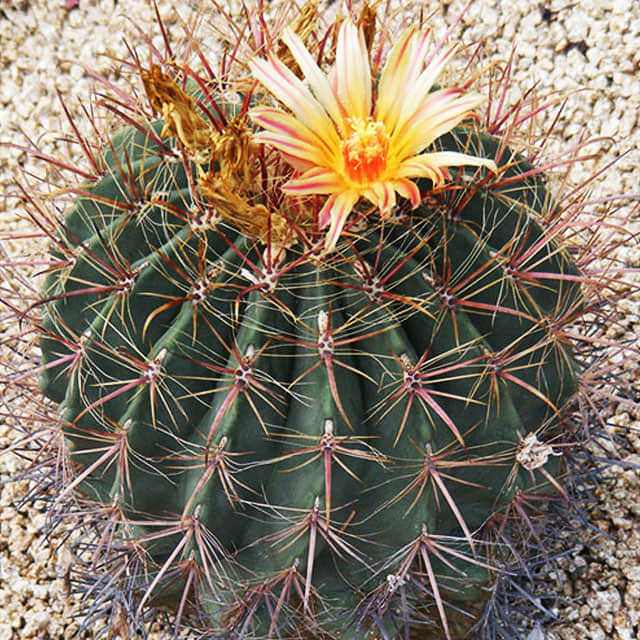
Ferocactus latispinus White Cottony Spots
eco White Cottony Spots

Ferocactus latispinus – White Cottony Spots

Why does your Ferocactus latispinus have white cottony spots? Diagnose the cause and fix it with our step-by-step guide.

search Possible Causes

error

Cottony Scale Insects

These small, immobile insects secrete a white, waxy, cotton-like substance to protect themselves while they suck sap from the cactus body. In Ferocactus latispinus, these spots often appear in the crevices between ribs where moisture can linger.

Very Common
lightbulb
How to confirm: Gently scrape a spot with a fingernail; if you see a small, brownish insect underneath the white fuzz, it is scale.
build How to fix it
shopping_cart Recommended Products
1 Apply an organic insecticide spray to the cactus, ensuring you target the crevices between the ribs where the scale insects are hiding.
2 Manually remove visible cottony clusters using a cotton swab dipped in isopropyl alcohol to kill the insects on contact.
3 Improve airflow around the cactus and reduce moisture in the crevices by avoiding overhead watering, which can encourage scale infestations.
error

Mealybugs

Mealybugs are common pests for barrel cacti and produce distinct white, fluffy clusters that look like bits of cotton. They thrive in the humid microclimates found near the base or deep within the spine clusters of the plant.

Very Common
lightbulb
How to confirm: Check the base of the spines for tiny, moving white insects using a magnifying glass.
build How to fix it
shopping_cart Recommended Products
1 Treat the visible white clusters immediately with an organic insecticide spray to kill adult mealybugs and larvae.
2 Use a cotton swab dipped in isopropyl alcohol to manually remove any remaining fluffy masses from deep within the spine clusters.
3 Monitor the soil moisture levels to ensure the environment is not too humid, which can encourage mealybug resurgence.
warning

Early Stage Fungal Growth (Sclerotinia/Botrytis)

If the white spots appear more like a fine mold rather than distinct clumps, it may be fungal growth triggered by high humidity or organic debris trapped in the cactus ribs. This is often accompanied by soft, decaying tissue on the plant epidermis.

Common
lightbulb
How to confirm: Press the area around the white spot to see if the cactus skin feels soft or mushy compared to the rest of the plant.
build How to fix it
shopping_cart Recommended Products
1 Carefully remove the white cottony growth using a soft brush or cotton swab dipped in isopropyl alcohol to prevent the fungus from spreading to healthy tissue.
2 Apply an organic fungicide to the affected area to halt the spread of Sclerotinia or Botrytis, and ensure the cactus is kept in a low-humidity environment.
3 Improve airflow around the cactus ribs and ensure the soil is well-draining by mixing in horticultural perlite to prevent moisture retention.
local_hospital All symptoms eco All plants with white cottony spots
favorite


