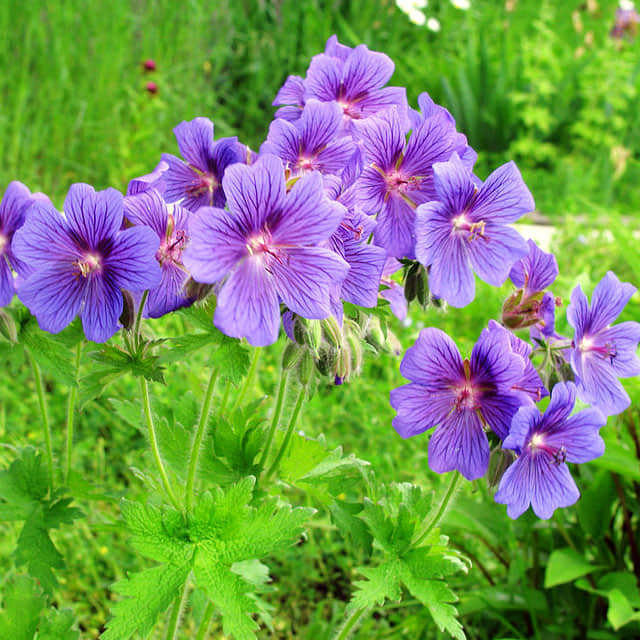
Geranium clarkei White Cottony Spots
eco White Cottony Spots

Geranium clarkei – White Cottony Spots

Why does your Geranium clarkei have white cottony spots? Diagnose the cause and fix it with our step-by-step guide.

pets Pet Friendly

search Possible Causes

error

Mealybugs

These small insects secrete a waxy, white substance to protect themselves, which appears as cottony masses in the crevices of Geranium clarkei stems and leaf axils. They feed on plant sap, weakening the cranebill and causing leaves to yellow.

Very Common
lightbulb
How to confirm: Inspect the undersides of leaves and stem junctions for tiny, slow-moving white insects hidden within the fluff.
build How to fix it
shopping_cart Recommended Products
1 Isolate the plant immediately to prevent the mealybugs from spreading to your other houseplants.
2 Treat the affected areas by spraying the plant with an organic insecticide/miticide to eliminate the insects and their waxy coating.
3 Use a cotton swab dipped in isopropyl alcohol to manually remove visible white cottony masses from the stems and leaf axils.
error

Powdery Mildew

This fungal disease manifests as a white, flour-like coating on the surface of Geranium clarkei foliage, especially in humid conditions or poor airflow. It can eventually lead to leaf necrosis and stunted growth.

Very Common
lightbulb
How to confirm: Check if the white spots look more like a surface film that can be partially rubbed off with your finger rather than a physical mass.
build How to fix it
shopping_cart Recommended Products
1 Apply an organic fungicide to the affected foliage to eliminate the powdery mildew spores and prevent further spread.
2 Improve air circulation around the plant and avoid overhead watering to reduce the humidity that promotes fungal growth.
3 Prune and carefully dispose of any heavily infected leaves to prevent the fungus from spreading to healthy parts of the plant.
warning

Cottony Scale

Certain scale insect species produce a white, filamentous coating that resembles cotton on the stems of Geranium clarkei. These pests drain nutrients from the plant, often resulting in sticky honeydew residue left on leaves.

Common
lightbulb
How to confirm: Look for small, hard bumps underneath the white fuzz and check for a sticky residue on the leaves below the infestation site.
build How to fix it
shopping_cart Recommended Products
1 Treat the plant with an organic insecticide/miticide spray to eliminate the scale insects and their white coating.
2 Carefully wipe the stems and leaves with a cotton swab dipped in isopropyl alcohol to physically remove visible scale insects.
3 Monitor the plant for sticky honeydew residue and clean any affected leaves to prevent secondary fungal growth.
warning

Botrytis (Gray Mold) - Early Stage

While typically associated with gray fuzzy mold, early stages of Botrytis in damp Geranium clarkei can present as pale, whitish necrotic patches on tender tissue. This is common if the plant's foliage remains wet for extended periods.

Common
lightbulb
How to confirm: Observe if the white spots are accompanied by soft, decaying tissue or browning edges on flower buds or leaves.
build How to fix it
shopping_cart Recommended Products
1 Prune and remove all affected foliage immediately to prevent the spread of fungal spores to healthy tissue.
2 Apply an organic fungicide to protect remaining healthy leaves and control the fungal growth.
3 Improve air circulation around the plant and ensure you water only at the base to keep the foliage dry.

Other Geranium clarkei problems

Your plant might also be experiencing one of these issues:

local_hospital All symptoms eco All plants with white cottony spots
favorite



