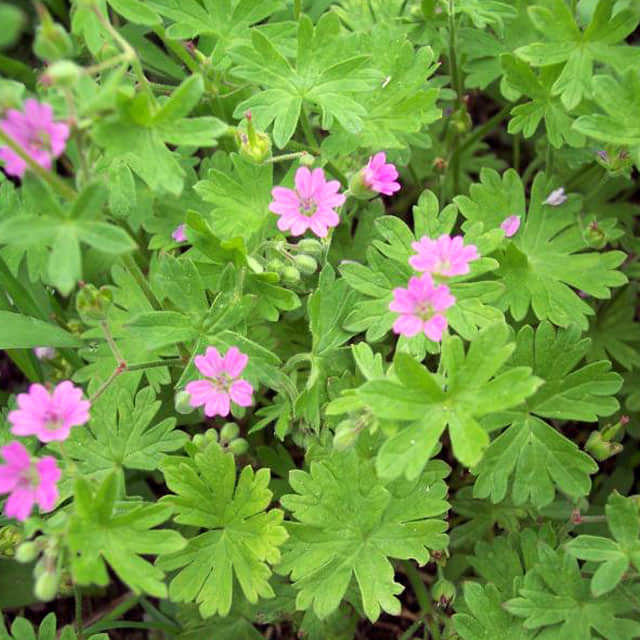
Why does your Geranium molle have yellow leaves? Diagnose the cause and fix it with our step-by-step guide.
Pet FriendlyGeranium molle prefers well-drained soil; excessive moisture causes the roots to suffocate, leading to chlorosis (yellowing) of the foliage. This is often the first sign of incipient root rot in woodland perennials.
A lack of nitrogen prevents the plant from producing sufficient chlorophyll, resulting in older, lower leaves turning pale yellow first. This is common in exhausted garden beds where nutrients have been depleted by heavy spring growth.
Extreme fluctuations, such as a sudden late frost or intense summer heatwaves, can damage the cellular structure of Soft Cranesbill leaves, causing them to lose pigment. This physiological stress often manifests as widespread yellowing.
Certain fungal pathogens thrive in humid microclimates around the dense foliage of Geranium molle. While often presenting as spots, early infection can cause a general yellowing of the leaf tissue surrounding the lesions.
Your plant might also be experiencing one of these issues:

 English
 Italiano