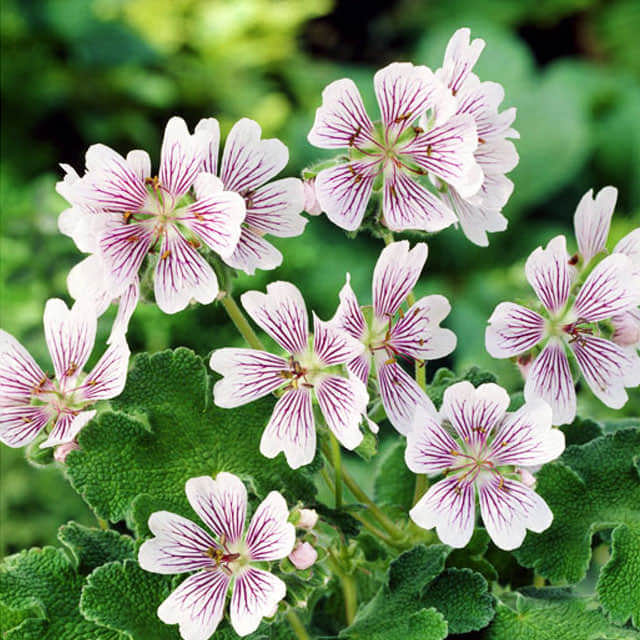
Why does your Geranium renardii have yellow leaves? Diagnose the cause and fix it with our step-by-step guide.
Geranium renardii is a drought-tolerant species that is highly susceptible to root rot if the soil stays saturated. Yellowing leaves are often the first sign of oxygen deprivation in the root zone caused by fungal pathogens like Phytophthora.
A lack of nitrogen prevents the plant from producing chlorophyll, leading to a uniform yellowing of older leaves first. This is common in Geranium species grown in depleted or highly leached potting soils.
As a temperate perennial, sudden drops in temperature or frost can cause the plant to shut down chlorophyll production. This often manifests as chlorosis (yellowing) followed by wilting of the foliage.
Small arachnids feed on the sap of Geranium renardii, causing stippling that eventually turns whole leaves yellow. This stress disrupts the plant's ability to photosynthesize effectively.
Your plant might also be experiencing one of these issues:

 English
 Italiano