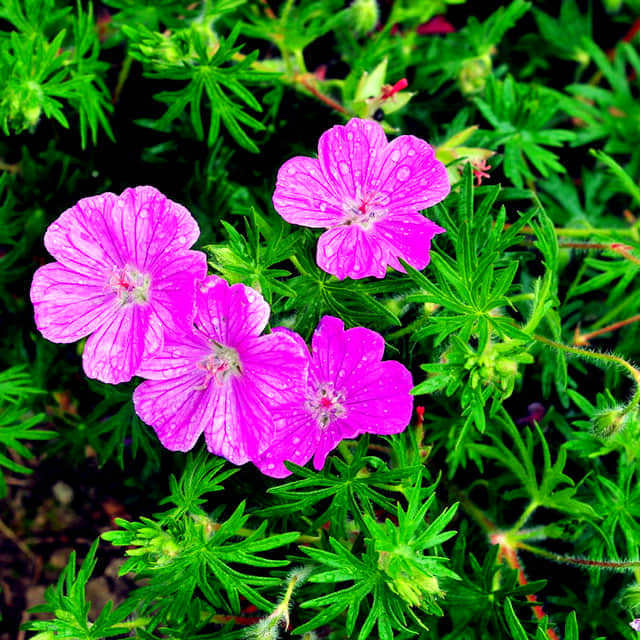
Geranium sanguineum Yellow Leaves
eco Yellow Leaves

Geranium sanguineum – Yellow Leaves

Why does your Geranium sanguineum have yellow leaves? Diagnose the cause and fix it with our step-by-step guide.

pets Pet Friendly

search Possible Causes

error

Overwatering and Poor Drainage

Geranium sanguineum is quite drought-tolerant once established, but excessive moisture causes root hypoxia. This leads to chlorophyll breakdown, manifesting as yellowing foliage, often starting with the lower leaves.

Very Common
lightbulb
How to confirm: Stick your finger two inches into the soil; if it feels soggy or muddy, reduce watering frequency immediately.
build How to fix it
shopping_cart Recommended Products
1 Immediately stop watering and allow the soil to dry out completely before the next watering session.
2 Repot the plant in a well-draining medium, incorporating perlite to improve aeration and prevent future waterlogging.
3 Ensure the plant is in a container with adequate drainage holes and use a saucer to catch excess water, making sure not to let the pot sit in standing water.
error

Nitrogen Deficiency

As a vigorous perennial, this species requires consistent nutrients. A lack of nitrogen prevents the synthesis of chlorophyll, resulting in a uniform yellowing of older leaves as the plant mobilizes nutrients to new growth.

Very Common
lightbulb
How to confirm: Check if the yellowing is progressing from old, bottom leaves toward the new tips and apply a balanced liquid fertilizer.
build How to fix it
shopping_cart Recommended Products
1 Apply a nitrogen-rich liquid fertilizer to the soil to quickly replenish the plant's nutrient levels and restore chlorophyll production.
2 Incorporate an organic soil amendment like worm castings into the top layer of the soil to provide a slow-release source of nitrogen.
3 Monitor the soil moisture levels using a moisture meter to ensure that nitrogen uptake is not being hindered by overwatering.
warning

Temperature Stress (Cold Shock)

While hardy, sudden drops in temperature or frost can cause metabolic disruption. This stress often triggers the plant to shed older leaves via chlorosis as it enters a semi-dormant state.

Common
lightbulb
How to confirm: Observe if the yellowing coincided with a recent cold snap or night temperatures dropping near freezing.
build How to fix it
shopping_cart Recommended Products
1 Move the plant to a sheltered, warmer location away from cold drafts or frost to stabilize the temperature.
2 Monitor soil moisture closely to ensure the plant is not overwatered while in its semi-dormant state, as cold, wet soil can lead to root rot.
3 Once temperatures stabilize, apply a light feeding of liquid seaweed to help the plant recover from metabolic stress.
warning

Fungal Root Rot (Phytophthora species)

In damp, poorly ventilated conditions, fungal pathogens can attack the root system of Cranesbill. This destroys the plant's ability to transport water and minerals, causing leaves to turn yellow and eventually wilt.

Common
lightbulb
How to confirm: Gently lift a plant from its pot to check if the roots are dark, slimy, or have a foul odor.
build How to fix it
shopping_cart Recommended Products
1 Immediately reduce watering frequency and ensure the plant is in a well-draining medium to stop the spread of fungal pathogens.
2 Repot the plant in a fresh, airy substrate enriched with perlite to improve aeration and prevent future root rot.
3 Apply a fungicide treatment to protect the remaining healthy tissue from further fungal attack.

Other Geranium sanguineum problems

Your plant might also be experiencing one of these issues:

local_hospital All symptoms eco All plants with yellow leaves
favorite