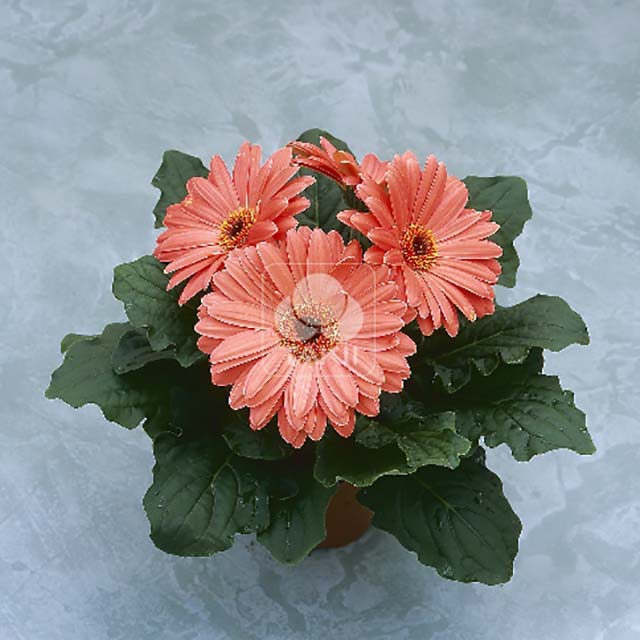
Gerbera Royal F1 Peach 2009 Sticky Leaves
eco Sticky Leaves

Gerbera Royal F1 Peach 2009 – Sticky Leaves

Why does your Gerbera Royal F1 Peach 2009 have sticky leaves? Diagnose the cause and fix it with our step-by-step guide.

pets Pet Friendly

search Possible Causes

error

Aphid Infestation

Aphids are small, soft-bodied insects that pierce the tender stems and leaves of Gerbera daisies to suck sap. As they feed, they excrete a sugary substance known as honeydew, which creates the characteristic sticky residue on the foliage.

Very Common
lightbulb
How to confirm: Inspect the underside of the leaves and new growth for tiny, green or black moving insects.
build How to fix it
shopping_cart Recommended Products
1 Apply an organic insecticide to eliminate the aphid population and stop the production of honeydew.
2 Gently wipe the sticky residue from the leaves using a soft cloth and water to prevent fungal growth.
3 Inspect the undersides of leaves and new growth regularly to ensure no new pests have emerged.
warning

Scale Insects

Scale insects attach themselves to the stems and leaf bases of Gerbera plants, feeding on phloem sap. Like aphids, they produce honeydew as a byproduct of their digestion, leading to sticky leaves and potential sooty mold growth.

Common
lightbulb
How to confirm: Look for small, stationary, bump-like structures firmly attached to the stems or leaf petioles.
build How to fix it
shopping_cart Recommended Products
1 Treat the plant with an organic insecticide to eliminate the scale insects and stop the production of honeydew.
2 Wipe the leaves and stems with a damp cloth to remove the sticky residue and prevent the growth of sooty mold.
3 Inspect the undersides of leaves and stem crevices for any remaining insect crawlers or scale clusters.
warning

Whitefly Infestation

Whiteflies congregate on the undersides of Gerbera leaves to feed on plant fluids. Their feeding activity results in honeydew accumulation, which can also attract secondary fungal issues like sooty mold.

Common
lightbulb
How to confirm: Gently tap the foliage to see if a cloud of tiny white insects flies out from underneath the leaves.
build How to fix it
shopping_cart Recommended Products
1 Apply an organic insecticide to eliminate the whitefly population and stop the production of honeydew.
2 Deploy yellow sticky traps near the plant to capture adult whiteflies and monitor the infestation level.
3 Gently wipe the sticky leaves with a damp cloth to remove accumulated honeydew and prevent sooty mold growth.
warning

Mealybugs

Mealybugs are slow-moving pests that secrete a waxy, white coating and excrete honeydew. While they primarily target nodes and leaf junctions in Gerberas, the resulting sugar residue can coat surrounding leaf surfaces.

Common
lightbulb
How to confirm: Search for small, white, cotton-like clusters tucked into the crevices where the leaf meets the stem.
build How to fix it
shopping_cart Recommended Products
1 Isolate the plant immediately to prevent the spread of mealybugs to other greenery and spray the affected areas with an organic insecticide to kill existing pests.
2 Wipe the sticky leaves and white waxy residue off the plant using a cotton swab dipped in isopropyl alcohol to remove the honeydew and dislodge the insects.
3 Monitor the plant closely for new infestations and use yellow sticky traps to capture any flying adults or migrating pests.

Other Gerbera Royal F1 Peach 2009 problems

Your plant might also be experiencing one of these issues:

local_hospital All symptoms eco All plants with sticky leaves
favorite

