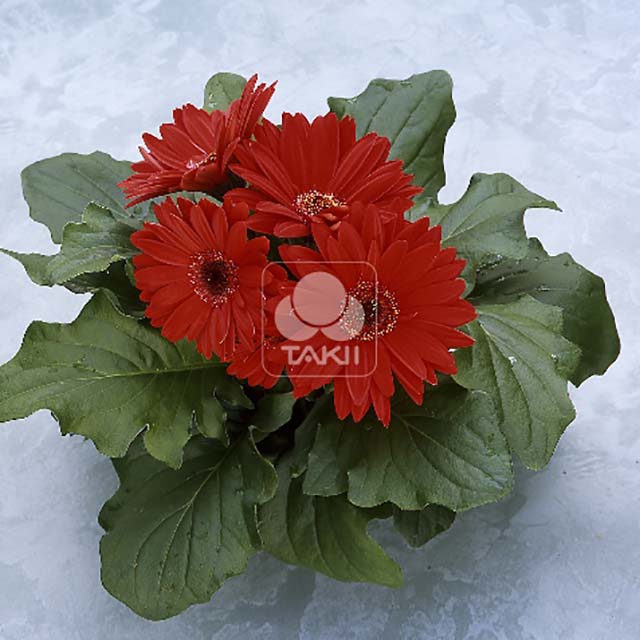
Gerbera Royal F1 Red 4316 White Powder
eco White Powder

Gerbera Royal F1 Red 4316 – White Powder

Why does your Gerbera Royal F1 Red 4316 have white powder? Diagnose the cause and fix it with our step-by-step guide.

search Possible Causes

error

Powdery Mildew

A fungal disease caused by Oidium species, common in Gerbera daisies when humidity is high and airflow is restricted. It manifests as white, flour-like patches on leaves and stems.

Very Common
lightbulb
How to confirm: Inspect the underside of the leaves to see if the white coating is fuzzy and spreading across the leaf surface.
build How to fix it
shopping_cart Recommended Products
1 Apply an organic fungicide to eliminate the existing fungal spores and prevent the disease from spreading to healthy leaves.
2 Improve air circulation around the plant and reduce humidity by spacing plants further apart and avoiding overhead watering.
3 Prune and carefully dispose of any heavily infected leaves to reduce the fungal load on the plant.
warning

Mealybugs

These small, soft-bodied insects secrete a white, waxy, cottony substance to protect themselves. They feed on the sap of Gerbera plants, often clustering at the leaf axils or base of the flower head.

Common
lightbulb
How to confirm: Use a magnifying glass to look for tiny, moving insects hidden within the white patches near the stem junctions.
build How to fix it
shopping_cart Recommended Products
1 Isolate the plant immediately to prevent the mealybugs from spreading to other greenery and treat the infestation with an organic insecticide spray.
2 Use a cotton swab dipped in isopropyl alcohol to manually remove visible white, cottony clusters from the leaf axils and flower bases.
3 Monitor the soil moisture levels to ensure the plant is not overly damp, as high humidity can encourage pest activity.
warning

Botrytis cinerea (Gray Mold) - Early Stage

In high humidity, Botrytis can sometimes present with whitish, translucent spots on petals or leaves before turning gray and fuzzy. This is particularly common in dense Gerbera blooms.

Common
lightbulb
How to confirm: Check if the white patches are accompanied by soft, decaying tissue or browning of the petal edges.
build How to fix it
shopping_cart Recommended Products
1 Apply an organic fungicide to the affected areas to halt the spread of the mold spores.
2 Improve air circulation around the dense blooms and reduce humidity by avoiding overhead watering.
3 Prune and remove any heavily infected petals or leaves to prevent the fungus from spreading to healthy tissue.
warning

Mineral/Salt Buildup

Excessive fertilizers or hard water can leave a white, crusty residue on the leaf surface as water evaporates. Unlike fungus, this is usually a thin, flat film rather than a raised growth.

Common
lightbulb
How to confirm: Try wiping the white substance with a damp cloth; if it disappears easily without leaving a fuzzy texture, it is likely mineral buildup.
build How to fix it
shopping_cart Recommended Products
1 Gently wipe the leaves with a soft, damp cloth to remove the mineral residue and prevent further buildup.
2 Flush the soil thoroughly with distilled or rainwater to leach out accumulated mineral salts from the root zone.
3 Monitor soil hydration levels more closely using a moisture meter to avoid overwatering, which can exacerbate salt accumulation.

Other Gerbera Royal F1 Red 4316 problems

Your plant might also be experiencing one of these issues:

local_hospital All symptoms eco All plants with white powder
favorite



